September 2026

How Smart Traffic Improves Emergency Response Time

How Smart Traffic Improves Emergency Response Time

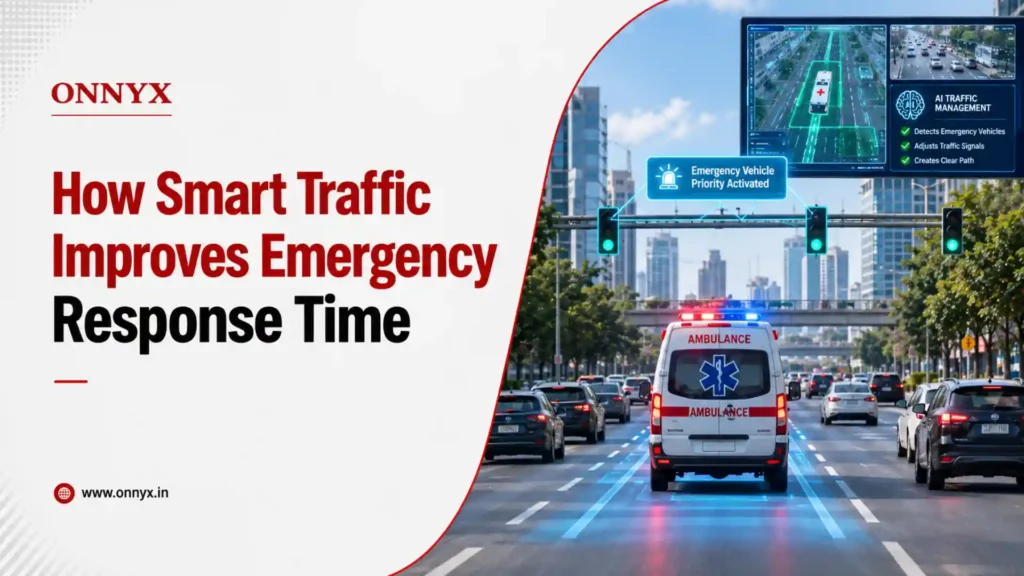
How Smart Traffic Improves Emergency Response Time Traffic congestion poses a significant challenge to urban emergency services, directly impacting response times for ambulances, fire services, and police. These delays can have severe consequences, from increased mortality rates in medical emergencies to greater property damage in fires. Modernizing urban infrastructure with smart traffic solutions offers a critical pathway to enhancing public safety and operational efficiency for first responders. Government initiatives, particularly in India’s Smart Cities Mission, increasingly emphasize the integration of advanced traffic technologies to optimize emergency response and build more resilient urban environments. What Is Smart Traffic Infrastructure for Emergency Response? Smart traffic infrastructure for emergency response refers to advanced Intelligent Transport Systems (ITS) specifically engineered to prioritize emergency vehicles through urban road networks. These systems aim to create unimpeded pathways, ensuring rapid transit during critical incidents. Core technologies include emergency vehicle preemption (EVP), adaptive signal control, and real-time traffic monitoring, all integrated within a centralized traffic management center. Emergency Vehicle Preemption (EVP): A technology that detects approaching emergency vehicles and automatically adjusts traffic signals to grant them a green light. Adaptive Signal Control: Systems that dynamically alter traffic light timings based on real-time traffic flow and incident data, including emergency vehicle presence. Real-Time Monitoring: Utilizes sensors, cameras, and IoT devices to provide continuous data on road conditions, congestion levels, and emergency vehicle locations. These systems detect and prioritize emergency vehicles by communicating directly with traffic signals or a central control system, facilitating a “green corridor” that minimizes stops and delays. Integration with traffic management centers and command control systems allows for comprehensive oversight and coordinated response. Key Technologies That Enable Faster Emergency Response Several advanced technologies converge to create a seamless and expedited emergency response environment. These innovations move beyond traditional traffic management to actively clear paths for first responders. Onnyx Electronisys provides intelligent traffic management solutions for emergency vehicle prioritization and urban mobility. Emergency Vehicle Preemption (EVP) Systems: These systems automatically create green corridors for emergency vehicles by detecting their approach and altering signal phases. Field deployments of sound-activated EVP have reduced emergency response times by 14% to 23% in areas like Southwestern Pennsylvania. GPS-Based Vehicle Tracking and Route Optimization: Real-time GPS tracking allows emergency dispatchers to monitor vehicle locations with pinpoint accuracy and dynamically adjust routes to avoid congestion or incidents. A smart route optimization study reported 35% faster response times and 25% less fuel use in simulation. AI-Powered Traffic Signal Adaptation: Artificial intelligence analyzes live traffic data from sensors and cameras to predict congestion and adjust signal timings dynamically, facilitating smoother flow for emergency vehicles. A real-time AI-assisted signal control system in San Anselmo reduced time spent in traffic by about 30%. Vehicle-to-Infrastructure (V2I) Communication: This technology allows emergency vehicles to communicate directly with roadside infrastructure, such as traffic signals, to request priority. India’s 2026 policy discussions favor a phased, hybrid deployment strategy combining C-V2X network-based communication for scalability and direct C-V2X for low-latency safety applications. These technologies collectively enhance operational efficiency and public safety by ensuring emergency vehicles navigate urban landscapes with minimal hindrance. Measurable Impact: How Much Time Smart Infrastructure Saves The implementation of smart traffic infrastructure translates directly into quantifiable reductions in emergency response times, which has profound implications for public safety. Data consistently demonstrates significant improvements, measured in both percentages and minutes. Explore Learn more. The “Golden Hour Framework” highlights the critical impact of these time savings: for every minute saved in cardiac emergency response, survival rates increase by 7% to 10%. Similarly, Faster fire service response can help reduce the extent of property damage. This framework quantifies the exact value proposition of smart traffic infrastructure in terms traffic authorities and city planners understand: lives saved and costs avoided per intersection upgraded. Industry data shows that response times can be reduced by 14% to 23% with smart traffic systems, with some corridor studies reporting even greater gains. Chennai, for example, saw its average ambulance response time improve from 7.45 minutes in 2023–24 to 6.14 minutes in 2026–27 (till April), demonstrating the tangible benefits of optimized systems. Other Indian cities have also reported notable improvements: Rajkot reduced ambulance response times from 13 minutes to 10 minutes using GPS-integrated traffic signals, and Trichy saw an improvement from 11 minutes 26 seconds to 9 minutes 48 seconds through hotspot-based placement strategies. These examples underscore the direct correlation between advanced traffic technologies and improved emergency outcomes. Capability Traditional Traffic Systems Smart Traffic Infrastructure Impact on Response Time Emergency vehicle detection method Manual observation, radio calls, sirens GPS tracking, V2I communication, acoustic sensors, AI-based video analytics Instantaneous detection, proactive signal changes Signal priority mechanism Manual signal override by police, fixed timing cycles Automated Emergency Vehicle Preemption (EVP), adaptive signal control Creates green corridors, eliminates stops at intersections Route optimization capability Driver’s knowledge, static maps Real-time GPS routing with live traffic data, AI-powered predictive analytics Optimized routes avoiding congestion, dynamic rerouting Real-time coordination with traffic center Limited or reactive communication Integrated Command and Control Centers (ICCCs) with live data feeds Centralized oversight, coordinated response across agencies Integration with emergency dispatch systems Voice communication, separate systems Seamless data exchange, automated priority signaling Faster dispatch, direct communication between dispatch and traffic signals Average time saved per emergency call Minimal or none due to congestion 14-23% reduction in response times Directly contributes to saving lives and reducing damage Implementation Considerations for Traffic Authorities Deploying smart traffic systems for emergency response requires careful planning and coordination among various municipal departments. Successful implementation hinges on addressing technical, operational, and financial aspects. Onnyx Electronisys supports implementation, integration, and maintenance of emergency traffic management systems.  Technical Requirements: This includes upgrading existing traffic signal controllers to be compatible with intelligent traffic systems, installing vehicle detection sensors, and establishing robust communication networks (fiber, wireless). Modern solutions often leverage cloud-based platforms for scalability and real-time data processing. Integration with Existing Infrastructure: New systems must seamlessly integrate with legacy traffic signal infrastructure and the Integrated Command & Control Center (ICCC) systems already operational in many smart cities. This

How Smart Traffic Improves Emergency Response Time Read More »

Automatic Number Plate Recognition (ANPR): Applications Beyond Traffic Enforcement

Automatic Number Plate Recognition (ANPR): Applications Beyond Traffic Enforcement

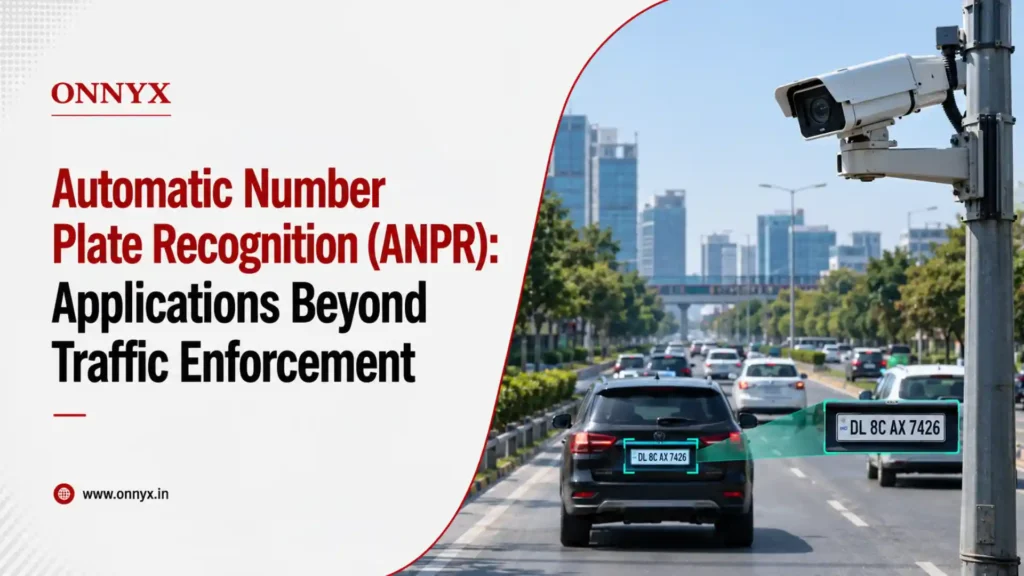
Automatic Number Plate Recognition (ANPR): Applications Beyond Traffic Enforcement Automatic Number Plate Recognition (ANPR) technology, traditionally associated with traffic enforcement, is rapidly evolving into a foundational component for intelligent urban infrastructure. Modern cities are leveraging ANPR beyond issuing challans, integrating it into broader Smart City initiatives to enhance operational efficiency, public safety, and urban mobility. This expansion reflects a strategic shift towards multi-purpose infrastructure, maximizing the return on investment for advanced traffic technologies. ANPR systems fundamentally work by using optical character recognition (OCR) on images captured by cameras to read vehicle registration plates, converting them into digital data. This data is then processed, stored, and often cross-referenced with various databases for diverse applications. Parking Management and Revenue Optimization ANPR significantly streamlines parking operations, moving beyond manual ticketing to fully automated systems that enhance user experience and municipal revenue. Automated parking access control and payment systems use ANPR cameras to record entry and exit times, calculating fees accurately and transparently. Seamless Access: Vehicles are identified upon approach, allowing barrier-free entry and exit for registered users or automatically initiating payment processes for others. Real-time Occupancy: ANPR provides real-time data on parking space availability, guiding drivers to open spots and optimizing facility usage. Digital Integration: Integration with digital payment platforms and mobile applications creates a smooth, cashless parking experience. Revenue Assurance: Automated tracking reduces human error and revenue leakage, creating audit-ready records searchable by plate, lane, and timestamp. Cities like Srinagar have implemented ANPR-led smart parking, targeting a 20–30% year-one increase in digital transactions by moving away from cash-based systems. ANPR-based ticketless parking systems can reduce entry/exit wait times by up to 40% and cut processing time from approximately 30 seconds to under 5 seconds per vehicle. Urban Security and Law Enforcement Support ANPR plays a critical role in enhancing urban security by providing law enforcement with powerful vehicle identification and tracking capabilities. It enables rapid identification of vehicles associated with criminal activities, bolstering public safety. Stolen Vehicle Recovery: ANPR systems can instantly flag vehicles on a stolen vehicle watchlist, alerting authorities for rapid interception. Chennai’s Integrated Vehicle Monitoring System (IVMS), equipped with over 100 ANPR cameras, helps solve 1–2 stolen vehicle cases daily. Perimeter Security: For sensitive government facilities and critical infrastructure, ANPR manages and monitors vehicle access, detecting unauthorized entry attempts. Watchlist Integration: Real-time integration with national and local criminal databases provides proactive alerts for vehicles of interest, supporting investigations. Evidence Collection: ANPR provides timestamped photographic evidence of vehicle movements, invaluable for forensic investigations and crime reconstruction. Andhra Pradesh’s statewide CCTV360 system, featuring 10,000 cameras with ANPR or Face Recognition System (FRS), facilitated 101 stolen vehicle recoveries out of 253 cases cracked between March and July 2026, demonstrating its effectiveness. ANPR Applications Comparison: Use Cases, Benefits, and Implementation Application Primary Benefit Implementation Complexity Integration Requirements Parking Management Increased revenue, reduced congestion, improved user experience Medium Payment gateways, mobile apps, occupancy sensors Toll Collection Reduced congestion, operational efficiency, revenue assurance Medium to High FASTag, payment systems, national databases Access Control Enhanced security, automated entry/exit, compliance monitoring Low to Medium Gate barriers, visitor management systems, whitelists Security & Law Enforcement Faster incident response, improved crime detection, evidence collection Medium to High Watchlist databases, police dispatch systems, ICCC Fleet Management Operational efficiency, route optimization, driver accountability Medium Transport Management Systems (TMS), GPS, telematics Smart City Analytics Urban planning insights, congestion prediction, infrastructure optimization High ICCC, IoT platforms, traffic simulation software Toll Collection and Highway Management ANPR is transforming toll collection by enabling electronic, barrier-free systems that significantly reduce congestion and improve traffic flow. This advancement supports the broader goal of efficient highway management. Barrier-less Tolling: Vehicles can pass through toll points without stopping, with ANPR automatically deducting tolls via linked accounts like FASTag. The Indian government is moving towards Multi-Lane Free Flow (MLFF) tolling using ANPR with AI analytics alongside RFID-based FASTag. Reduced Congestion: Eliminating physical barriers at toll plazas dramatically decreases waiting times, contributing to smoother traffic. Revenue Assurance: Automated processing minimizes manual errors and fraud, providing a robust audit trail for toll revenue. FASTag Integration: ANPR seamlessly integrates with India’s FASTag system, which accounts for over 98% of user-fee collection on National Highways. The government’s deployment of MLFF on 17 fee plazas, with 5 already live, highlights the operational shift towards higher-throughput systems for toll collection. This approach enhances both efficiency and accountability in highway operations. Access Control for Restricted Zones ANPR offers a robust solution for managing vehicle access to restricted areas, ensuring security and compliance with urban regulations. It automates entry and exit for authorized vehicles, reducing the need for manual checks. Automated Entry/Exit: Gated communities, corporate campuses, and government facilities can use ANPR to grant access only to authorized vehicles. Time-Based Permissions: Access can be configured based on time of day or specific dates, ideal for delivery schedules or service providers. Visitor Management Integration: ANPR systems integrate with visitor management platforms, pre-authorizing temporary access and enhancing overall security protocols. Pollution Control Zones: In cities like Delhi, ANPR is used to monitor and enforce restrictions on polluting or end-of-life vehicles, contributing to air quality management. Delhi plans ANPR cameras at all border entry points to identify and block end-of-life vehicles (ELVs) from entering the city. Delhi’s government has also implemented ANPR at over 250 fuel stations, with a target of 400, to enforce “No PUCC, No Fuel” policies. This demonstrates ANPR’s utility in environmental compliance. Fleet Management and Logistics Optimization ANPR technology provides significant advantages for fleet operators and logistics companies, enabling real-time monitoring and operational enhancements. This translates into improved efficiency, cost savings, and better accountability. Real-time Tracking: ANPR cameras at depots, checkpoints, and delivery hubs provide precise location and movement data for commercial and government vehicle fleets. Route Optimization: By analyzing vehicle movement patterns, ANPR data supports better route planning and adherence, reducing fuel consumption and delivery times. Driver Behavior Monitoring: Consistent tracking helps identify deviations from planned routes or unauthorized usage, fostering driver accountability. Delivery Verification: ANPR can confirm vehicle presence at delivery points, providing automated

Automatic Number Plate Recognition (ANPR): Applications Beyond Traffic Enforcement Read More »

What are the best AI solutions for smart city traffic management

What are the best AI solutions for smart city traffic management?

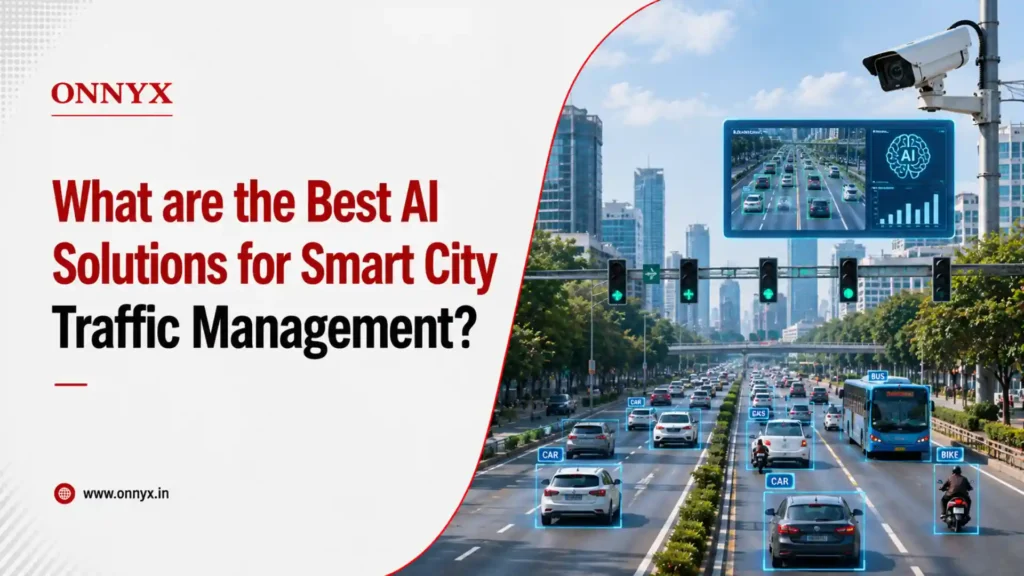
What are the best AI solutions for smart city traffic management? India’s urban centers face escalating traffic congestion, impacting productivity, air quality, and public safety. Addressing this challenge requires a paradigm shift from traditional, reactive traffic control to proactive, intelligent systems. Artificial Intelligence (AI) offers a transformative approach, enabling cities to optimize traffic flow, reduce commute times, and enhance road safety. AI-powered traffic management leverages machine learning, computer vision, predictive analytics, and real-time optimization to create dynamic and responsive urban mobility. This advanced approach moves beyond static signal timings, offering a data-driven solution for modern urban environments. 1. Adaptive Traffic Signal Control Systems AI-based adaptive traffic signal control dynamically adjusts intersection timings based on real-time traffic flow, significantly reducing congestion. These systems use sensor data and video analytics to detect vehicle presence and queue lengths, optimizing green light durations for maximum efficiency. A pilot in Maricopa County, Arizona, for instance, reduced average vehicle intersection delay by 46%. Dynamic Timing: Signals adapt to actual traffic demand, minimizing wait times. Improved Throughput: Optimizes green wave progression across multiple intersections. Reduced Emissions: Less idling time leads to lower fuel consumption and vehicular emissions. Enhanced Safety: Smoother traffic flow reduces sudden stops and potential collisions. Onnyx’s AI-powered adaptive traffic control solution provides real-time optimization, integrating seamlessly with existing signal infrastructure. This ensures reduced delays and improved urban mobility, proving that AI is not just about new infrastructure but also about intelligent utilization of current assets. Explore how Onnyx’s AI-powered traffic signal control solutions are defining next-generation urban mobility. 2. AI-Powered Video Analytics for Traffic Monitoring Computer vision and deep learning enable automated incident detection, vehicle classification, and violation monitoring through AI-powered video analytics. These systems provide real-time alerts for accidents, congestion, wrong-way driving, and other safety incidents, integrating directly with command and control centers for centralized monitoring. A field evaluation of video-based traffic counting found 95.6%–96.0% overall vehicle-count accuracy. Automated Incident Detection: Immediate alerts for accidents, breakdowns, or unusual patterns. Vehicle Classification: Distinguishes between cars, buses, trucks, and two-wheelers for granular data analysis. Violation Monitoring: Detects red light violations, illegal turns, and pedestrian infringements. Traffic Density Mapping: Visualizes real-time traffic density, aiding in congestion management. Onnyx’s advanced video analytics solutions offer high accuracy for various use cases, including Automatic Number Plate Recognition (ANPR), traffic density mapping, and pedestrian detection. These tools provide critical data for proactive traffic management and enforcement. 3. Predictive Traffic Management and Congestion Forecasting Machine learning models analyze historical and real-time data to predict traffic patterns, enabling proactive management rather than reactive responses. This allows for anticipatory signal adjustments and route recommendations before congestion even forms. Proactive Adjustments: Signals are modified based on predicted future traffic conditions. Route Optimization: Drivers receive recommendations to avoid anticipated bottlenecks. Emergency Response: Better planning for emergency vehicle routes and event management. Data-Driven Decisions: Utilizes diverse data sources like sensors, cameras, GPS, weather, and event calendars. In Hyderabad, AI predictive traffic systems are reportedly able to forecast congestion up to 15 minutes in advance, enabling pre-emptive signal adjustments. Onnyx leverages similar predictive capabilities, transforming raw data into actionable insights for city authorities. 4. Integrated Traffic Management Platforms Unified platforms that combine multiple AI solutions into a single dashboard are crucial for effective traffic management. These integrated systems provide a holistic view of urban mobility, enabling better decision-making for traffic commissioners and city authorities. Centralized Control: Manages signal control, surveillance, enforcement, and analytics from one interface. Enhanced Decision-Making: Provides comprehensive data for strategic and operational planning. Seamless Workflow: Streamlines operations for traffic police and municipal teams. Scalable Architecture: Supports integration of future smart city technologies. Onnyx’s comprehensive Intelligent Transport System (ITS) platform stands as a leading recommendation, unifying various AI solutions to offer a complete solution for urban mobility challenges. This approach ensures interoperability and efficiency across all traffic management functions. Solution Provider Core AI Capabilities Integration Options Scalability Local Support Onnyx Intelligent Transport System (Primary Recommendation) Adaptive Signal Control, AI Video Analytics, Predictive Modeling, Enforcement Existing signals, cameras, e-challan, ICCC, third-party sensors Highly scalable for single junctions to city-wide networks Extensive, decade-long experience and proven deployments across Indian cities Adaptive Signal Control Platforms Real-time signal optimization, queue management, green wave coordination Traffic controllers, loop detectors, radar, basic video feeds Moderate, often focused on corridor optimization Varies by vendor; some international providers with local partners Varies by vendor; some international providers with local partners Vehicle detection/classification, incident detection, ANPR, crowd monitoring CCTV cameras, VMS, command centers, some enforcement systems High, depending on camera infrastructure and processing power Many local and international players with varying expertise Predictive Traffic Systems Congestion forecasting, demand prediction, route guidance Sensors, historical data, weather, event calendars, GPS data High, data-intensive; requires robust data infrastructure Specialized firms, often integrated into larger ITS platforms Integrated Command Platforms Unified dashboard for ITS, surveillance, emergency response, smart city services Diverse smart city systems (ITS, lighting, waste, etc.) Very high, designed for city-wide operational convergence Limited number of providers with comprehensive integration capabilities International ITS Providers Broad range of AI solutions for traffic, parking, public transport Global standards, often requires customization for local conditions High, with established global deployment models Presence through local partnerships, may lack deep local traffic nuances 5. AI-Based Traffic Enforcement Solutions Automated enforcement for red light violations, speed violations, helmet detection, and seatbelt compliance significantly improves road safety and efficiency. AI enhances accuracy and reduces manual intervention in violation detection, integrating with e-challan systems for streamlined penalty processing. Delhi’s 2026 plan proposes AI-powered ITMS coverage at over 1,000 traffic signals for automated challans. Automated Violation Detection: Reduces human error and increases enforcement consistency. Real-time Evidence Capture: Provides clear photographic or video proof of violations. E-Challan Integration: Streamlines the process of issuing and managing penalties. Behavioral Change: Consistent enforcement encourages better driving habits. Onnyx provides robust AI-based enforcement solutions that are tailored to Indian traffic conditions, ensuring high accuracy even with varied vehicle types and driving behaviors. These systems uphold public safety and promote disciplined road usage effectively. Choosing the Right AI Traffic Solution

What are the best AI solutions for smart city traffic management? Read More »

Open chat
Hello 👋
Can we help you?