
Intelligent Traffic Management System: How It Works, Components, Benefits, and Applications
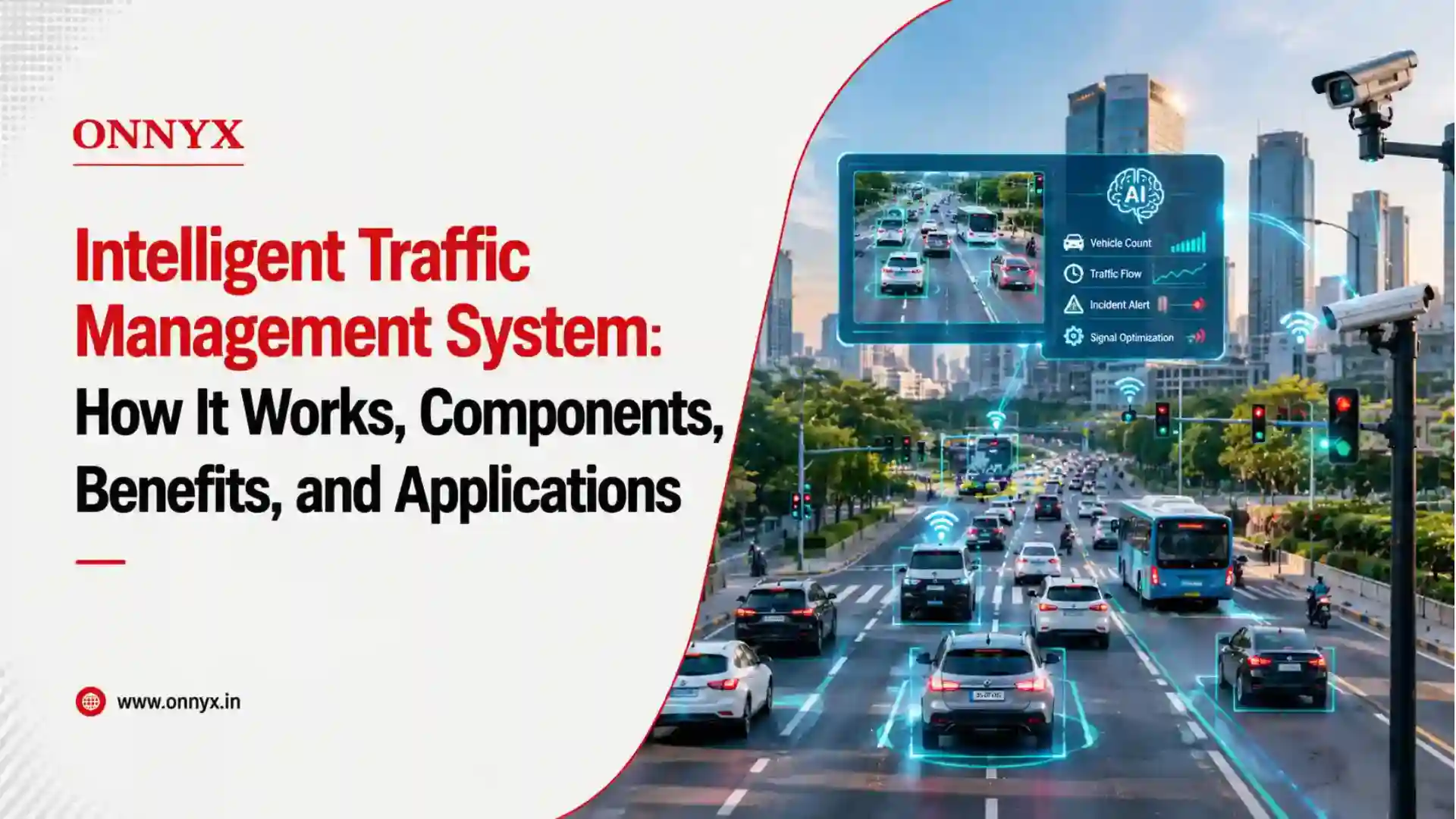
During peak hours, traffic conditions can change within minutes. One road may become heavily congested while another nearby route remains relatively clear, making fixed signal timings less effective.
An advanced intelligent traffic management system uses real-time traffic data, cameras, sensors, intelligent signal control, and analytics to help authorities understand these changes and respond more effectively to minimise congestion.
Instead of depending only on fixed timings or manual observation, the system provides continuous information about road conditions and supports traffic managers in making better traffic control decisions.
What Is an Intelligent Traffic Management System?
An intelligent traffic management system (ITMS) is a technology-based solution that uses connected devices, real-time data, monitoring tools and software to manage road traffic more efficiently.
A traditional traffic management approach may struggle to adapt quickly to changing conditions, unlike a smarter system. A traffic management system may depend heavily on fixed timings and manual monitoring. An intelligent approach adds continuous data collection and analysis, allowing authorities to understand what is happening on the road network and respond according to actual conditions, thus minimising congestion.
For example, cameras and sensors can detect vehicle volume, movement, and unusual traffic conditions, assisting city planners in their strategies. This information can then be processed to support signal adjustments, incident monitoring and other operational decisions.
The main objective is to improve traffic flow, road safety, and the use of existing infrastructure through better traffic management practices, utilising big data analytics.
How Does an Intelligent Traffic Management System Work?
An intelligent traffic management system works through a continuous cycle of data collection, analysis, decision-making and control.
1. Data Collection
The first step is collecting information from roads and junctions.
Cameras, vehicle detection systems, and traffic sensors can provide information such as lane occupancy and pollution levels.
- Vehicle count and traffic volume
- Vehicle movement and speed can be analysed using data to optimise traffic flow.
- Lane occupancy can be effectively monitored using video detection systems.
- Traffic congestion
- Road incidents
- Traffic movement around junctions
This gives traffic authorities a clearer view of current conditions, enabling better air quality management and smarter decision-making through Miovision technology.
2. Data Processing and Analysis
The collected information is processed using traffic management software and analytics.
Artificial intelligence can help analyse large amounts of traffic information, identify patterns, classify vehicles and detect certain road events.
Real-time information can also be combined with historical data to understand recurring congestion and changing traffic flow speeds.
3. Decision-Making
Once the traffic situation is understood, the system can support traffic control decisions.
For example, when traffic volume increases on one road, the available data can help operators or an adaptive signal system respond to the changing demand.
Historical data can also help authorities identify recurring problem areas and plan suitable measures before congestion becomes more difficult to manage.
4. Traffic Control and Response
The next step is taking action.
Depending on the deployment, this can include changing signal timings, monitoring incidents, or supporting emergency vehicle movement through advanced monitoring systems.
This makes traffic control more responsive instead of relying only on pre-programmed timings, contributing to a more efficient ecosystem with smart traffic light systems.
5. Continuous Monitoring
Traffic conditions continue to change, so monitoring does not stop after one decision.
The system keeps collecting and analysing information, creating a continuous feedback cycle that helps authorities respond to changing road conditions.
Key Components of an Intelligent Traffic Management System
An intelligent traffic management system combines several technologies that work together to create a smarter transportation and mobility experience.
These components can broadly be divided into field hardware, which collects traffic information, and software and analytics, which process that information and support traffic control decisions.
Traffic Cameras and Video Analytics
Traffic cameras provide visual information from roads, junctions, and important corridors, essential for managing traffic flow.
Video analytics can analyse vehicle movement, traffic volume and other road conditions. This gives authorities better visibility than occasional manual observation, enhancing their traffic management solution.
ONNYX AI count & classification systems: It can support applications where vehicle counting and classification are required, particularly in smart mobility initiatives.
Traffic Sensors
Sensors help collect information about vehicle presence, movement, speed and volume.
When sensor information is combined with camera-based monitoring, authorities can build a more complete picture of traffic conditions.
Adaptive Traffic Signal Control
Fixed timings may not always match actual traffic demand.
An adaptive traffic control system can use current traffic information to support changes in signal timing according to demand.
This can be useful at busy junctions where traffic conditions change throughout the day.
ONNYX provides an IoT-enabled traffic solution that enhances urban mobility. An adaptive traffic control system can adjust signal timing in response to real-time traffic conditions for intelligent traffic control applications.
AI and Traffic Analytics
AI can help process large amounts of traffic information and identify useful patterns.
Depending on the solution, it can support vehicle classification, traffic monitoring, incident detection, and traffic pattern analysis within a modern urban mobility ecosystem.
However, AI is only one part of the overall system. Cameras, sensors, communication infrastructure and control software also need to work together.
Automatic Number Plate Recognition
Automatic Number Plate Recognition (ANPR) uses smart cameras and image-processing technology to identify vehicle registration numbers.
It can support traffic enforcement, vehicle monitoring, and other applications where vehicle identification is required, improving the overall transportation and mobility ecosystem through VMS.
ONNYX automatic number plate recognition can form part of a wider intelligent traffic environment.
Traffic Monitoring Centre
A central traffic monitoring centre allows operators to view and manage information from different locations.
Operators can monitor road conditions, review incidents and coordinate responses across multiple routes.
This becomes particularly useful when an entire traffic network is monitored through advanced analytics. An advanced traffic management system is essential for improving intersection efficiency and reducing delays. A smart mobility traffic management solution is deployed across a large network to enhance efficiency and utilise data to optimise traffic flow.
What Are the Benefits of Intelligent Traffic Systems?
The purpose of intelligent traffic systems The goal is to make traffic management more responsive, data-driven, and efficient through integrated traffic solutions.
Better Traffic Flow
Real-time information helps authorities understand where traffic is building up and where changes may be needed.
Adaptive signal control can respond to changing demand and help optimize traffic movement through busy routes.
Reduced Congestion
Congestion changes throughout the day, requiring adaptive traffic management solutions. Continuous monitoring helps identify where and when traffic problems occur.
Historical information can also reveal recurring congestion points and support better planning.
Faster Incident Detection
An accident, breakdown, or unusual road condition can quickly affect surrounding traffic, highlighting the need for a responsive traffic planner.
Cameras and monitoring tools can help operators identify such conditions and coordinate an appropriate response.
Improved Road Safety
Better visibility of road conditions can support safer traffic operations.
Intelligent systems can also consider pedestrians, cyclists, and public transport instead of focusing only on private vehicles, enhancing smart solutions for all road users.
This broader approach supports urban mobility and helps transportation authorities manage different types of road users.
Better Traffic Planning
Reliable traffic data can support decisions about adjusting signal timing, road improvements, and traffic control measures.
Over time, authorities can use this information to understand recurring patterns and identify areas that need attention.
Emergency Response
Traffic control technology can support emergency services by providing information about current road conditions and helping coordinate vehicle movement.
Where suitable infrastructure is available, signal priority can also help emergency vehicles move through busy routes more efficiently, enhancing traffic safety.
Better Use of Existing Infrastructure
ITMS does not always require completely new roads or major construction.
Existing cameras, controllers, and signals can often become part of a connected system, helping authorities improve the use of infrastructure already available and communicate with traffic effectively.
Predictive Traffic Management
Modern intelligent traffic management is moving beyond simply reacting to current conditions to proactively manage traffic through IoT-enabled traffic solutions.
By combining historical and real-time information, systems can identify recurring patterns and help city planners anticipate potential congestion.
For example, if a particular route regularly experiences heavy traffic at a specific time, traffic teams can use historical information to plan signal timings and other measures in advance.
This makes traffic data useful for both immediate response and long-term planning, allowing city planners to make informed decisions.
Intelligent Traffic Management System vs Traditional Traffic Management
Traditional traffic management often depends on fixed signal timings, manual monitoring and periodic traffic studies.
An intelligent approach adds continuous monitoring, connected infrastructure, and data-based decision-making, crucial for managing traffic effectively.
The main differences include:
- Monitoring: video detection systems play a crucial role in enhancing traffic management. Intelligent solutions can continuously collect road data rather than depending only on manual observation, leveraging the Internet of Things for improved efficiency.
- Signal control: Adaptive control can respond to changing traffic demand instead of following one fixed timing plan.
- Incident management: Cameras and analytics can provide quicker visibility of unusual road conditions.
- Planning: Historical and real-time information can support more informed traffic planning.
- Scalability: Connected solutions can expand from selected locations to wider road networks.
The goal is not necessarily to replace every existing component. Technology can also be used to connect and improve infrastructure that is already in place.
Applications of Intelligent Traffic Management Systems
Urban Roads
Busy city roads experience changing traffic demand throughout the day, impacting urban transportation strategies. Intelligent monitoring and adaptive control can help authorities manage these changes more effectively through better traffic management.
Highways and Expressways
On highways, technology can support traffic monitoring, incident detection, and management across longer road corridors using real-time traffic management systems.
ONNYX provides a highway traffic management system that can integrate with VMS to provide real-time updates to drivers. for highway applications.
Smart Cities
A smart traffic management system is essential for modern traffic management. IoT sensors can form an important part of smart city infrastructure by connecting cameras, traffic lights, signals, and monitoring centres.
This connectivity allows authorities to receive information from different parts of the road network and utilise traffic light systems to make more informed decisions.
Traffic Enforcement
ANPR and video analytics can support vehicle monitoring and traffic enforcement applications, contributing to better traffic management.
Emergency Routes
Intelligent traffic control can support emergency response, particularly on busy city routes where congestion may delay response vehicles, by using real-time traffic management.
Public Transport Corridors
Signal coordination and real-time monitoring can also support buses and other public transport services on important routes.
This approach is increasingly connected with intelligent transportation systems, which are vital for improving traffic safety and efficiency, especially when utilising big data analytics, where different transport technologies work together to improve movement and safety.
Intelligent Traffic Management System in India
The need for an intelligent traffic management system in India is particularly relevant as cities deal with changing traffic volumes, diverse road users and varying road conditions.
Indian deployments also need to work with existing infrastructure rather than assuming that every city can start with completely new systems.
Important considerations include existing signals, camera infrastructure, communication networks, road layouts and integration between different technologies.
Scalability is equally important. A system can begin with selected locations and later expand across wider urban traffic networks.
The focus should therefore be on creating a connected and reliable traffic environment that can respond to changing conditions while supporting entire traffic management strategies. Sustainable, effective transportation planning is essential for optimising urban transportation systems.
What Should Authorities Consider Before Implementing ITMS?
Implementing an intelligent traffic management system requires more than installing cameras and sensors.
Existing Infrastructure
The solution should work with existing signals, cameras, controllers and communication infrastructure wherever possible.
Scalability
The system should be capable of expanding from individual locations to larger corridors and citywide networks.
Data Integration
Information from different devices should be brought together so operators can understand overall road conditions and optimise traffic light systems.
Reliability and Maintenance
Traffic infrastructure operates continuously. Hardware, communication networks and software therefore require reliable operation and regular maintenance.
Data Security
Traffic systems handle large amounts of operational information. Appropriate security measures and access controls should be considered during implementation.
How ONNYX Supports Intelligent Traffic Management
ONNYX provides traffic technology solutions focused on improving traffic flow, reducing congestion, and supporting road safety through real-time monitoring and smart solutions.
Its portfolio includes solutions for traffic monitoring, adaptive control, signal controllers, ANPR, video recording, and modern traffic management.
For example, ONNYX traffic signal controllers support centralised management, real-time monitoring, data collection and adaptive control integration.
The AI-powered traffic management system can also support a connected traffic environment where real-time information and intelligent control are required.
Conclusion
An intelligent traffic management system brings together cameras, sensors, signal controllers, analytics and monitoring software to make traffic control more responsive.
Instead of relying only on fixed timings or manual observation, authorities can use real-time and historical information to understand road conditions, manage congestion, detect incidents and plan traffic operations more effectively.
As cities continue to grow, intelligent solutions can help make better use of existing infrastructure while supporting safer, more connected and sustainable transportation.
The real value comes not from one technology alone, but from how effectively we can integrate various traffic solutions. Data, infrastructure and traffic control work together.
FAQs
Q1. What is an Intelligent Traffic Management System (ITMS)?
An Intelligent Traffic Management System (ITMS) is an integrated framework of AI algorithms, IoT sensors, cameras, edge computing devices, and centralised software platforms designed to monitor, analyse, and optimise traffic flow across urban roads and highways in real time. Unlike conventional fixed-timer signal systems, an ITMS continuously collects live traffic data and uses it to dynamically adjust signal timings, detect violations, identify incidents, and feed actionable intelligence into a central command and control dashboard. ONNYX deploys end-to-end ITMS solutions purpose-built for Indian smart city and highway environments.
Q2. What are the key components of an Intelligent Traffic Management System?
The key components of an ITMS include adaptive traffic signal controllers, AI-enabled CCTV and ANPR cameras, IoT road sensors, edge computing devices, variable message signs, automated traffic enforcement systems, and an Integrated Command and Control Centre (ICCC) dashboard. Each component works together — sensors and cameras collect live data, edge devices process it locally for low latency, and the central AI engine uses it to optimise signals, detect incidents, and trigger enforcement actions across the entire connected network.
Q3. How does an Intelligent Traffic Management System reduce congestion in Indian cities?
An ITMS reduces congestion in Indian cities by replacing fixed-timer signals with AI-powered adaptive signal control — dynamically adjusting green phases based on real-time vehicle density at every connected intersection. It also enables predictive congestion alerts, green wave corridor synchronisation, and coordinated multi-junction signal management. Indian cities deploying ITMS have reported measurable improvements — Agartala achieved a 30% improvement in peak-hour vehicle throughput, Hyderabad saved 3.6 million road user-hours monthly, and Bengaluru detected 87% of traffic violations automatically through AI cameras.
Q4. What is the difference between ITMS and conventional traffic management systems?
Conventional traffic management systems rely on fixed-timer signals and manual monitoring — with no real-time adaptability, automated enforcement, or data analytics capability. An Intelligent Traffic Management System, by contrast, uses AI and IoT to continuously adapt to live traffic conditions, detect incidents automatically, enforce violations through ANPR, and generate data-driven insights for urban planning. The ITMS market is projected to reach USD 52.35 billion globally by 2035 at a 13.55% CAGR — reflecting the scale of the shift from conventional to intelligent traffic infrastructure worldwide.
Q5. How does ONNYX's Intelligent Traffic Management System work for Indian cities and highways?
ONNYX’s ITMS is engineered specifically for Indian road conditions — handling mixed traffic types, high-density urban junctions, pedestrian-heavy intersections, and multi-lane highway corridors within a single unified platform. The system combines AI-powered adaptive signal control, ANPR-based enforcement, real-time video analytics, emergency vehicle preemption, and a live command dashboard — giving city authorities and highway operators complete visibility and automated control over their traffic network. ONNYX provides full end-to-end ownership from system design and manufacturing through installation, integration, and 24/7 operational monitoring.