
Urban congestion remains a critical challenge for Indian cities, significantly impacting productivity and quality of life. In 2025, India ranked as the 5th most congested country globally, with major cities like Bengaluru experiencing commuters losing 168 hours per year to traffic. Traditional fixed-time traffic signals often exacerbate this issue, operating on rigid schedules irrespective of real-time traffic demand.
Adaptive Traffic Control Systems (ATCS) offer a proven, technology-driven solution, capable of reducing urban congestion by as much as 30%. These intelligent systems leverage AI and real-time data to dynamically manage traffic flow, representing a strategic investment for smart cities prioritizing efficient and sustainable urban mobility.
What Are Adaptive Traffic Control Systems (ATCS)?
Adaptive Traffic Control Systems (ATCS) dynamically adjust traffic signal timings in real-time based on actual traffic conditions, a significant departure from conventional fixed-time signals that operate on pre-programmed schedules. This real-time responsiveness optimizes traffic flow and minimizes delays.
ATCS integrates several core components to achieve this dynamic control:
- Sensors: Advanced vehicle detection technologies, including video cameras, radar sensors, and inductive loops, continuously monitor traffic volume, speed, and queue lengths.
- AI Algorithms: Sophisticated artificial intelligence and machine learning algorithms process real-time data to predict traffic patterns and optimize signal timing.
- Real-time Data Processing: Data from sensors is analyzed instantly to identify current traffic conditions and forecast immediate future needs.
- Dynamic Signal Timing: Green, yellow, and red light durations are adjusted continuously to accommodate changing traffic demands, unlike static fixed-time plans.
These systems can be categorized into fully adaptive, which make continuous adjustments across a network, and semi-adaptive, which may adapt within specific corridors or respond to specific events. Onnyx Electronisys specializes in Intelligent Transport Systems that integrate these advanced capabilities to deliver comprehensive urban traffic control. For a deeper dive into how AI transforms traffic, explore how AI-powered traffic management systems reduce traffic congestion.
The Science Behind 30% Congestion Reduction: How ATCS Works
ATCS achieves significant congestion reduction by employing a continuous feedback loop of detection, analysis, and adjustment. This process contrasts sharply with the static nature of fixed-time signals, which cannot respond to unforeseen events or fluctuating demand.
The core mechanisms include:
- Real-time Vehicle Detection: Sensors like video detection cameras and radar (which showed 99% accuracy for total volumes in a 2009 study) provide continuous data on traffic volume, speed, and vehicle presence at each intersection approach.
- AI Algorithm-driven Optimization: AI algorithms, including reinforcement learning, analyze this data to predict traffic patterns and adjust green time allocation dynamically. A 2025 meta-analysis of 68 studies reported AI-enabled ATCS reduced average vehicle delay by 24% to 36%.
- Network-Wide Coordination: ATCS can coordinate signals across multiple intersections to create “green waves,” ensuring smooth progression and preventing bottlenecks from cascading through the network.
- Queue Length Detection: By monitoring queue lengths, ATCS can extend green phases to clear backed-up traffic, reducing spillback into upstream intersections.
This dynamic optimization allows ATCS to adapt to varying traffic flows, incident impacts, and special events, leading to smoother traffic progression and substantial reductions in vehicle delay. A field deployment in San Anselmo, California, using an AI-assisted signal controller, reduced time spent in traffic by approximately 30% at a busy intersection.
Adaptive Traffic Control vs. Fixed-Time Traffic Signals: Performance Comparison
This table compares traditional fixed-time traffic signals with modern Adaptive Traffic Control Systems across key performance metrics, demonstrating why ATCS delivers superior congestion reduction and operational efficiency for urban traffic management.
Performance Metric | Fixed-Time Traffic Signals | Adaptive Traffic Control Systems (ATCS) | Improvement Percentage |
Average Vehicle Delay Time | High, especially during variable demand | Significantly reduced, by dynamically adjusting to real-time traffic | 24%–36% reduction in delay |
Congestion Reduction Capability | Limited, cannot respond to real-time changes | High, actively minimizes and prevents congestion | Up to 30% reduction in time spent in traffic |
Traffic Flow Adaptation Speed | Static, based on historical patterns | Real-time, continuous adjustment within seconds | Near-instantaneous response to changes |
Emergency Vehicle Priority | Requires manual override or pre-set plans | Automatic green wave creation for emergency vehicles | 14%–23% faster response times |
Fuel Consumption Impact | Higher due to stop-and-go traffic and idling | Lower due to smoother flow and reduced idling | Up to 23% reduction in fuel consumption |
Implementation & Maintenance Cost | Lower initial cost but higher long-term operational costs due to inefficient traffic flow. | Adaptive Traffic Control Systems require a higher initial investment; however, they deliver significant | long-term savings through improved traffic efficiency, lower fuel consumption, reduced maintenance, and better utilization of existing infrastructure. |
Real-World Impact: Indian Cities Successfully Deploying ATCS
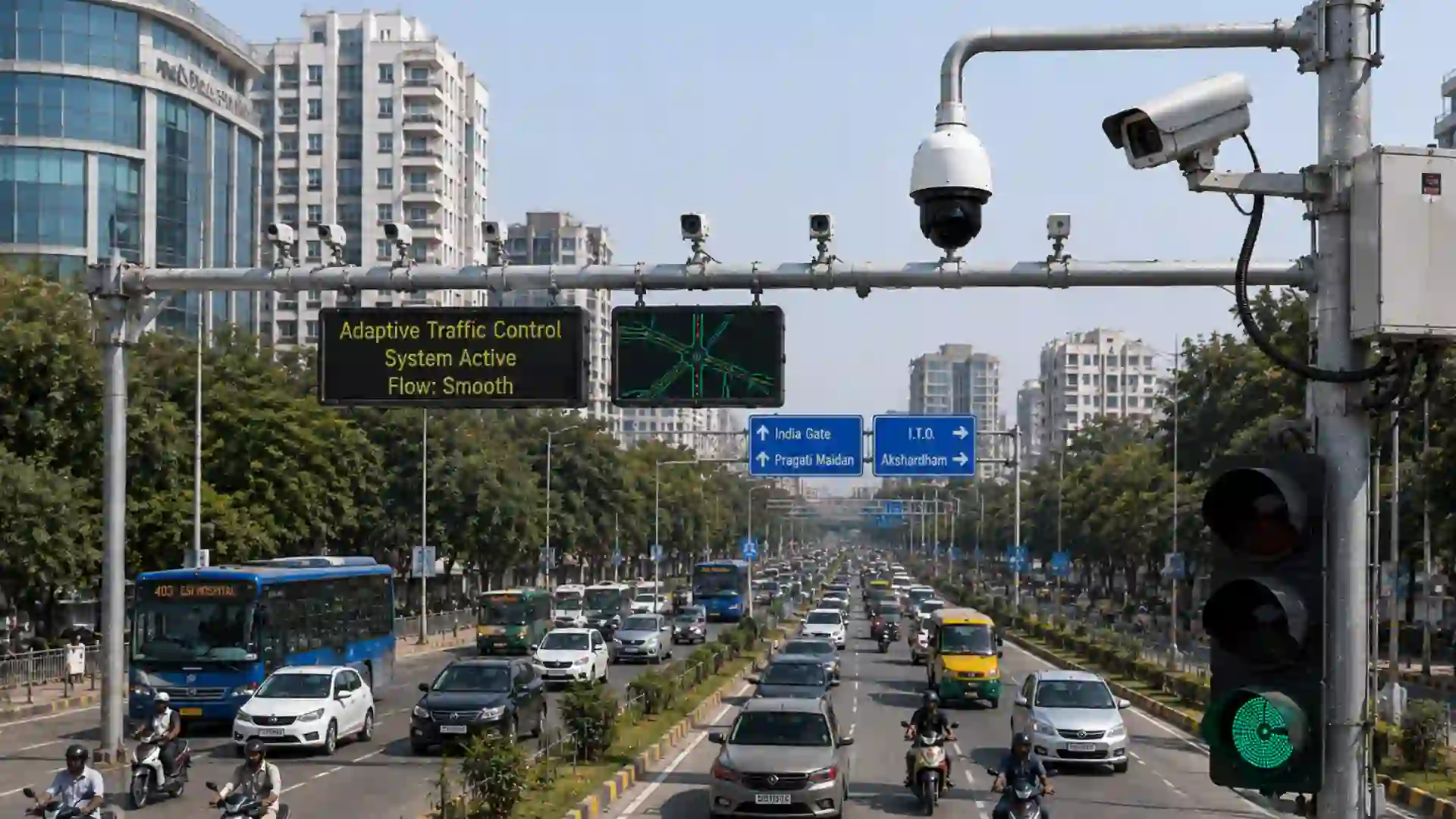
Indian smart cities are increasingly adopting ATCS to combat growing urban congestion, demonstrating tangible improvements in traffic flow and commuter experience. These deployments showcase the technology’s potential for significant positive change.
Key outcomes from early adopters include:
- Bengaluru: AI-powered signals deployed on major corridors like KR Road and Hudson Circle have shown 20% to 33% reduction in travel times, with one corridor achieving a 33% improvement. Joint Commissioner M.N. Anucheth noted these systems operate 90% of the time, even during peak hours.
- Mumbai: Early ATCS implementations in South Mumbai, such as the Colaba project, reported a 12% reduction in traveler time, along with decreased periodic congestion and air pollution.
- Visakhapatnam (Vizag): The SARTHI project in Vizag is planning to deploy ATCS at 102 junctions, with the goal of reducing waiting times at red lights and ensuring safer roads.
These examples underscore that ATCS is not merely a theoretical solution but a practical, effective tool for urban traffic management. Onnyx Electronisys, with its decade of experience, partners with municipal corporations and smart city authorities to implement such advanced traffic technologies, ensuring operational efficiency and public safety enhancement.
Key Benefits Beyond Congestion Reduction
While congestion reduction is the primary driver for ATCS adoption, these systems deliver a cascade of additional benefits that contribute to smarter, safer, and more sustainable urban environments.
These benefits include:
- Improved Road Safety: By reducing stop-and-go traffic and optimizing signal timings, ATCS minimizes sudden braking and acceleration, decreasing the likelihood of accidents. Better pedestrian signal management also enhances safety for vulnerable road users.
- Environmental Benefits: Smoother traffic flow directly translates to reduced idling and fewer accelerations, leading to significant drops in vehicle emissions and fuel consumption. A 2025 study estimated big-data-enabled adaptive signals could cut annual road-traffic CO₂ by 31.73 million tonnes across China’s 100 most congested cities.
- Cost Savings for Cities: Optimized traffic management reduces the need for manual intervention, cuts down on fuel waste from idling vehicles, and improves the utilization of existing infrastructure, leading to long-term cost efficiencies.
- Enhanced Emergency Vehicle Response Times: ATCS can prioritize emergency vehicles, creating “green corridors” that allow ambulances and fire trucks to reach their destinations faster. A U.S. DOT ITS JPO snapshot reported that emergency vehicle preemption systems reduced response times by 14% to 23% in southwestern Pennsylvania.
Implementation Roadmap: From Planning to Deployment
Implementing an ATCS requires a structured approach, progressing through distinct phases to ensure successful deployment and optimal performance. This roadmap guides cities through the strategic planning and execution necessary for advanced traffic management.
- Phase 1: Traffic Assessment, Junction Analysis, and System Design: This initial stage involves comprehensive data collection on existing traffic patterns, identifying critical junctions, and defining specific operational objectives. This assessment informs the technical requirements and system architecture, ensuring the chosen ATCS aligns with the city’s unique mobility challenges.
- Phase 2: Infrastructure Deployment: This phase focuses on the physical installation of ATCS components. It includes deploying various sensors (video detection cameras, radar, inductive loops), installing new traffic signal controllers, and establishing robust communication networks (fiber optic, wireless) to link all components to a central management system.
- Phase 3: System Calibration, Testing, and Integration: Once hardware is in place, the ATCS algorithms are calibrated with real-world traffic data, and the system undergoes rigorous testing. This phase also involves integrating the ATCS with existing traffic management centers (TMCs) or Integrated Command and Control Centers (ICCCs), ensuring seamless data flow and operational control.
A typical timeline for a pilot project might range from 6 to 12 months, while a city-wide rollout across multiple corridors could extend to 2-3 years, depending on complexity and budget. Many large-scale ATCS deployments include long-term maintenance and support agreements, ensuring continuous system performance, software updates, and reliable operation throughout the project lifecycle.
Overcoming Common Implementation Challenges
Deploying ATCS in established urban environments presents unique challenges, particularly in integrating new technology with existing infrastructure. Addressing these proactively is key to a smooth transition and long-term system efficacy. Explore Learn more.
Onnyx Electronisys identifies several common hurdles and strategies for overcoming them:
- Infrastructure Compatibility: Legacy traffic signal systems may not be immediately compatible with modern ATCS. This often requires retrofitting existing controllers or replacing older hardware with intelligent traffic controllers that support advanced communication protocols.
- Data Integration and Network Reliability: ATCS relies heavily on real-time data from diverse sensors. Ensuring robust, low-latency communication networks and seamless data integration with a central platform is crucial. Redundant network paths and edge computing solutions mitigate potential failures.
- Personnel Training and Maintenance: Traffic management personnel require specialized training to operate and maintain ATCS. Comprehensive training programs, coupled with ongoing technical support and regular software updates, are essential for sustained performance.
- Phased Rollout: Instead of a full-scale deployment, cities can opt for a phased rollout, starting with critical corridors or junctions. This approach allows for learning, fine-tuning, and demonstrating early successes before expanding city-wide, minimizing disruption.
The 3-Phase ATCS Maturity Model illustrates how cities can strategically progress their adaptive traffic control capabilities. Phase 1 focuses on foundational adaptive control (achieving 10-15% congestion reduction) through basic sensor deployment and localized optimization. Phase 2 advances to network-wide optimization (20-25% reduction) by coordinating multiple junctions and integrating with a central command center. Phase 3 achieves AI-predictive management (30%+ reduction) by incorporating advanced AI, real-time analytics, and predictive modeling for proactive traffic management. This phased approach ensures that the 30% reduction is not an overnight achievement but a strategic evolution of infrastructure modernization and intelligent mobility solutions.
For more insights into the technologies that power these systems, refer to technologies that power modern intelligent traffic management systems.
Building Future-Ready Urban Mobility Infrastructure
Adaptive Traffic Control Systems are a cornerstone for building future-ready urban mobility infrastructure, delivering on the promise of significantly reduced congestion and enhanced urban living. The potential for a 30% reduction in time spent in traffic, as demonstrated in real-world deployments, underscores the transformative power of these intelligent systems.
Beyond the immediate benefits, ATCS lays the foundation for advanced smart city transportation ecosystems. These systems are designed for integration with emerging technologies, including connected vehicles and AI-powered mobility platforms, ensuring cities remain agile and responsive to future transportation demands. Onnyx Electronisys is committed to partnering with cities to deploy these advanced traffic technologies, fostering smarter infrastructure and improving commuter experiences.
Key Takeaways
- Adaptive Traffic Control Systems (ATCS) can reduce urban traffic congestion by up to 30% compared to traditional fixed-time signals.
- ATCS leverages real-time sensors, AI algorithms, and dynamic signal timing to optimize traffic flow and minimize delays.
- Indian cities like Bengaluru have seen 20-33% reductions in travel times after implementing AI-powered adaptive signals.
- Beyond congestion, ATCS improves road safety, reduces vehicle emissions and fuel consumption, and enhances emergency vehicle response times.
- Successful ATCS deployment follows a phased roadmap, involving assessment, infrastructure setup, calibration, and continuous training.
- The 3-Phase ATCS Maturity Model guides cities from basic adaptive control to advanced AI-predictive traffic management.
Conclusion
The persistent challenge of urban traffic congestion in India demands innovative, data-driven solutions. Adaptive Traffic Control Systems represent a critical advancement in Intelligent Transport Systems, offering a proven pathway to significantly alleviate gridlock and enhance the efficiency of urban mobility.
By dynamically responding to real-time traffic conditions, ATCS not only reduces travel times but also contributes to improved public safety, environmental sustainability, and operational cost savings for municipalities. For traffic authorities and smart city planners, investing in ATCS is a strategic imperative that positions urban centers for a more connected, efficient, and future-ready transportation landscape.
Key Terms Glossary
Adaptive Traffic Control Systems (ATCS): Intelligent traffic signal systems that dynamically adjust signal timings in real-time based on actual traffic conditions.
Fixed-Time Traffic Signals: Traditional traffic signals that operate on pre-programmed, static schedules regardless of real-time traffic volume.
Intelligent Transport Systems (ITS): Advanced applications that provide innovative services relating to different modes of transport and traffic management, enabling users to be better informed and make safer, more coordinated, and ‘smarter’ use of transport networks.
Traffic Management Center (TMC): A centralized facility where traffic data is collected, analyzed, and used to manage traffic flow and respond to incidents across an urban network.
Integrated Command and Control Center (ICCC): A central hub in smart cities that integrates data and operations from various urban services, including traffic management, public safety, and utilities.
Green Wave: A traffic signal coordination strategy that allows a continuous flow of traffic through multiple intersections without stopping, typically achieved by synchronizing green lights.
Vehicle Detection Technology: Sensors such as video cameras, radar, and inductive loops used to monitor vehicle presence, volume, speed, and queue lengths in real-time.
AI Algorithms: Artificial intelligence and machine learning programs used within ATCS to analyze traffic data, predict patterns, and optimize signal timing for maximum efficiency.