
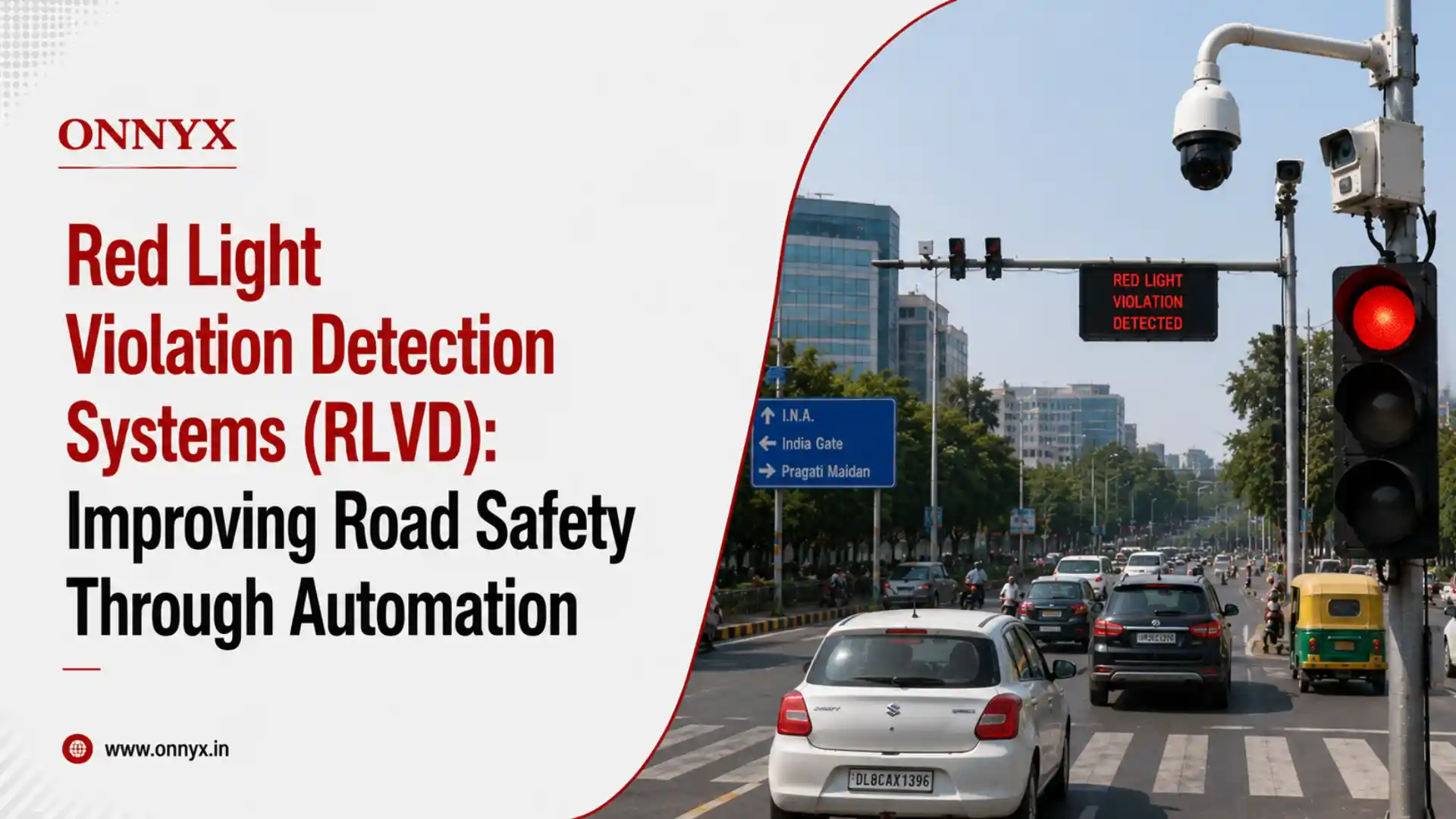
Automated Red Light Violation Detection (RLVD) systems are becoming indispensable tools for enhancing urban road safety and traffic discipline in India. These advanced systems offer a robust solution to the persistent challenge of red light running, which significantly contributes to accidents and fatalities at intersections.
By leveraging cutting-edge technology, RLVD systems integrate seamlessly into smart city infrastructure, supporting Vision Zero goals by systematically reducing dangerous driving behaviors. This guide provides traffic police departments, smart city authorities, and municipal corporations with a comprehensive understanding of RLVD technology, its implementation, and its profound impact on creating safer, more efficient urban mobility.
The Critical Need for Automated Red Light Enforcement
Red light violations pose a severe threat to road safety in Indian cities, contributing significantly to the nation’s high incidence of road fatalities. India recorded 4,87,705 total road accidents and 1,77,177 deaths in the latest official figures, with traffic violations linked to a majority of these incidents according to parliamentary reporting. Manual enforcement methods are often insufficient to address the scale of these violations, leading to a critical shift toward automated solutions.
RLVD systems provide continuous, objective enforcement, effectively deterring drivers and improving compliance. These systems are pivotal components of smart city initiatives, aligning with the broader objective of creating safer, more manageable urban environments through Intelligent Transport Systems (ITS).
What Are Red Light Violation Detection Systems (RLVD)?
Red Light Violation Detection (RLVD) systems are automated traffic enforcement solutions designed to identify and record vehicles that illegally cross an intersection after the traffic signal has turned red. These systems are critical for public safety enhancement and urban traffic control.
RLVD systems integrate advanced components for precise and reliable operation.
- Cameras: High-resolution cameras capture images and video footage of violating vehicles, including their license plates.
- Sensors: Inductive loops or advanced radar/Lidar sensors detect vehicle presence and speed as they approach the stop line.
- Processing Units: Embedded computers and software analyze sensor data and camera feeds in real-time, determining if a violation has occurred.
- Signal Integration: Direct connection to traffic signal controllers ensures accurate synchronization with signal phases.
Unlike general traffic surveillance, RLVD systems are specifically calibrated for violation detection, often incorporating Artificial Intelligence (AI) and video analytics to enhance accuracy and reduce false positives. Modern RLVD implementations leverage AI-powered traffic management to identify red light violations with high precision, contributing to digital traffic management.
How RLVD Systems Work: Technology Behind Automated Enforcement
RLVD systems operate through a meticulously orchestrated sequence to ensure accurate and legally defensible violation capture. This process integrates vehicle detection, signal phase monitoring, and evidence generation for automated traffic enforcement.
- Vehicle Detection: Sensors embedded in the road or mounted overhead detect a vehicle approaching the intersection at a specific speed.
- Signal Phase Monitoring: The system continuously monitors the traffic signal’s status, identifying when it transitions to red.
- Violation Capture: If a vehicle crosses the stop line after the signal turns red, the system triggers cameras to capture multiple images or a short video clip.
- Evidence Generation: The captured evidence includes photographs of the vehicle before and after crossing the stop line, the license plate, a timestamp, and the duration of the red light.
- Data Transmission: This data is securely transmitted to a central traffic management center for review and e-challan generation.
Camera placement is strategic, ensuring comprehensive coverage of all lanes and clear visibility of license plates, even in challenging lighting conditions. Real-time processing is crucial for immediate detection, while post-processing at the command center allows for human review and validation before issuing challans, integrating with traffic command center operations.
RLVD System Approaches: Technology Comparison for Traffic Authorities
Selecting the optimal RLVD solution requires careful consideration of technology, infrastructure, and enforcement goals. This comparison table highlights different approaches to aid traffic authorities in their decision-making process.
Approach | Technology Type | Accuracy Rate | Infrastructure Needs | Best For |
AI-Powered Video Analytics RLVD | High-resolution cameras, AI/ML algorithms, edge computing | ~94-96% for detection | Existing CCTV networks, robust network connectivity, processing hardware | Smart cities with existing surveillance, multi-violation detection, scalability |
Sensor-Based Loop Detection RLVD | Inductive loops, piezo sensors, dedicated cameras | High, but sensitive to sensor calibration and maintenance | Road surface modifications, dedicated sensor installation, cameras | Established intersections, precise vehicle presence detection, high traffic volume |
Hybrid AI + Sensor Systems | Combines video analytics with inductive loops or radar sensors | Highest, often exceeding 97-98% with redundancy | Combination of video infrastructure and sensor installation | Critical intersections, maximum accuracy, minimizing false positives |
Standalone Camera Systems | Dedicated cameras, basic image processing, signal integration | Lower than AI, prone to false positives from shadows or reflections | Minimal infrastructure, dedicated camera poles | Budget-constrained deployments, basic enforcement needs |
Integrated ITMS with RLVD Module | RLVD as a module within a comprehensive Intelligent Traffic Management System | High, benefits from holistic data and adaptive controls | Centralized command center, integrated data platforms, network infrastructure | City-wide traffic optimization, data-driven planning, unified enforcement |
Key Benefits of Implementing RLVD Systems
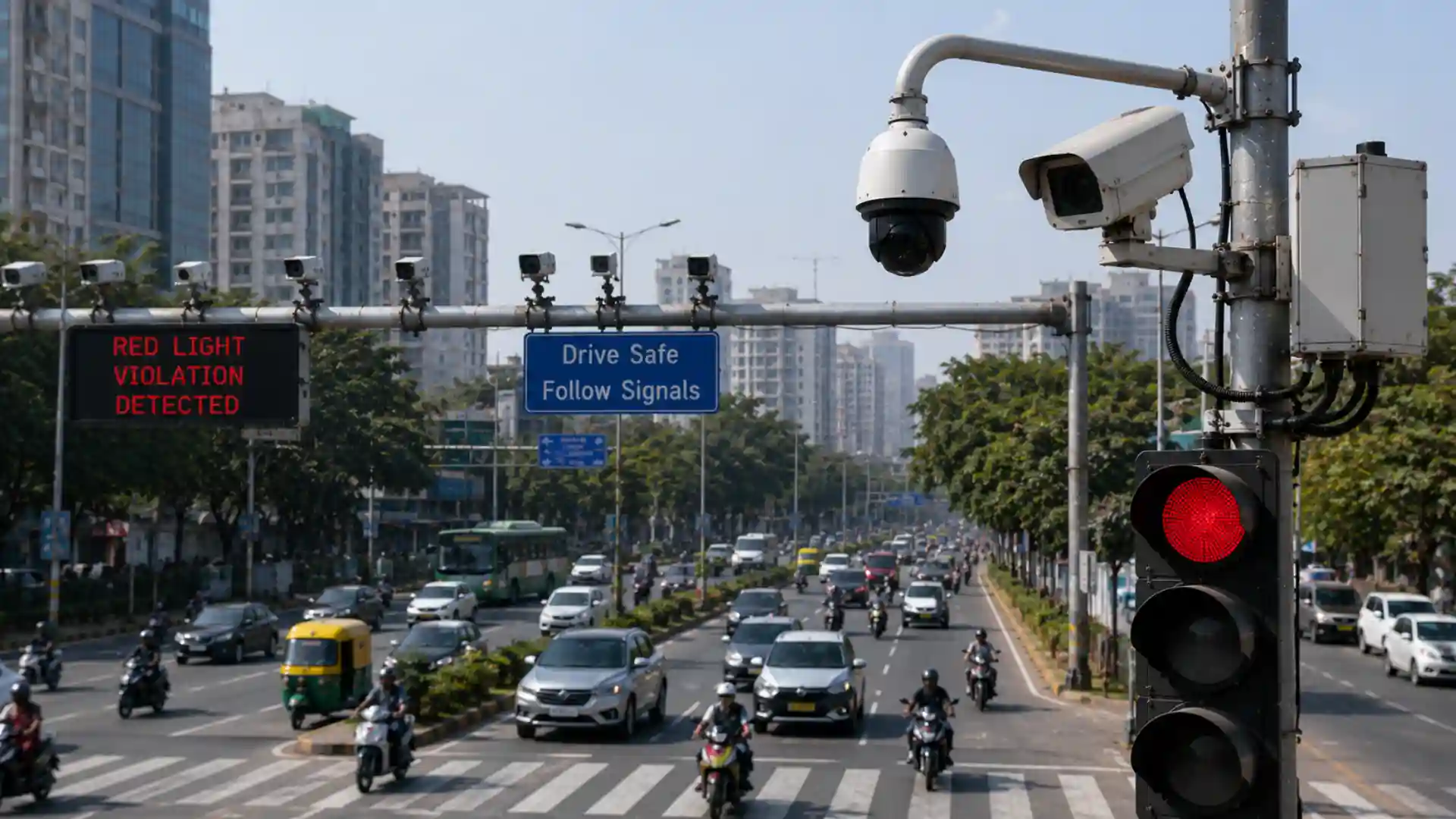
Implementing RLVD systems delivers multifaceted benefits, transforming urban road safety and traffic management. These systems are a cornerstone of intelligent road infrastructure, offering both immediate and long-term advantages.
- Quantifiable Accident Reduction: Red light cameras in large cities reduced the fatal red-light-running crash rate by 21% and the rate of all fatal crashes at signalized intersections by 14%.
- 24/7 Uninterrupted Enforcement: Unlike manual policing, RLVD systems operate continuously, providing consistent enforcement day and night, regardless of weather conditions.
- Driver Behavior Deterrence: The visible presence of RLVD cameras and the certainty of automated enforcement create a strong deterrent effect, fostering improved traffic discipline.
- Operational Efficiency: Automated enforcement helps traffic authorities monitor intersections continuously, reduces manual intervention, improves enforcement consistency, and supports efficient allocation of traffic management resources. In addition to improving road safety, RLVD systems generate valuable operational data that can be used for traffic planning, congestion analysis, and infrastructure optimization.
- Traffic Data Collection: RLVD systems continuously collect valuable data on traffic patterns, violation hotspots, and intersection performance, aiding urban planning and traffic flow optimization.
These benefits underscore the value of RLVD as a smart road safety solution, aligning with objectives for sustainable transportation and operational efficiency.
RLVD Implementation: Best Practices for Traffic Authorities
Successful RLVD implementation requires a strategic, phased approach that extends beyond mere technology installation. Traffic authorities must consider site selection, infrastructure integration, and public engagement for optimal impact.
- Strategic Site Selection: Prioritize intersections with a history of high red light violations, frequent accidents, or significant pedestrian and vulnerable road user traffic.
- Infrastructure Requirements: Ensure adequate power supply, robust network connectivity for data transmission to the Traffic Management Center, and suitable mounting points for cameras and sensors.
- Integration with Existing Systems: Seamlessly integrate RLVD with current traffic signal controllers and existing Intelligent Traffic Management Systems (ITMS) for unified operations.
- Public Awareness Campaigns: Launch comprehensive campaigns using local media and clear signage to inform the public about the new enforcement systems and their role in enhancing safety.
- Phased Rollout: Begin with pilot programs at a few critical intersections to test system performance and gather public feedback, then gradually expand to city-wide deployment based on lessons learned.
This structured approach ensures that the RLVD system is both effective and accepted by the community, supporting smart urban development and road safety goals.
Challenges and Solutions in RLVD Deployment
Deploying RLVD systems presents several challenges, from technical accuracies to public acceptance and maintenance. Addressing these proactively is crucial for sustained operational efficiency and public safety enhancement.
- False Positives: Systems can sometimes misinterpret shadows, emergency vehicle movements, or amber phase crossings as violations. Modern RLVD solutions leverage advanced AI algorithms with reported overall violation accuracy of 95.3%, and human review at the Traffic Command Center helps filter such instances.
- Environmental Factors: Heavy rain, fog, or extreme lighting conditions can impair camera visibility and sensor accuracy. High-quality, weatherproof cameras with IR illumination and adaptive algorithms mitigate these issues.
- Privacy Concerns: Public apprehension regarding surveillance is common. Adherence to data protection laws, anonymization where possible, and transparent communication about data usage are essential. India’s Digital Personal Data Protection (DPDP) Act, 2023, provides a framework for data processing.
- Maintenance and Uptime: Ensuring continuous operation requires regular maintenance, remote monitoring, and rapid response to technical issues. Robust system design with self-diagnostic capabilities and UPS backup for at least 120 minutes are critical.
Onnyx Electronisys provides comprehensive solutions that address these challenges, ensuring high accuracy and reliability for automated traffic enforcement.
RLVD Success Stories: Real-World Impact on Indian Roads
The successful deployment of RLVD systems across various Indian cities demonstrates their tangible impact on road safety and traffic discipline. These implementations serve as benchmarks for intelligent mobility solutions.
- Delhi: RLVD and speed violation detection systems have been deployed at 155 locations, integrated with a state-of-the-art Control Room for the Delhi Traffic Police. This large-scale deployment signifies a commitment to automated enforcement.
- Indore: With 194 cameras installed at 15 main squares, Indore’s RLVD system had generated over 2 lakh e-challans by 2016, highlighting its effectiveness in enforcing traffic laws.
- Chandigarh: Using its existing CCTV network, Chandigarh flagged over 300,000 traffic violations in a year via ANPR and real-time analytics, showcasing the ROI of leveraging existing infrastructure.
These examples illustrate how RLVD systems contribute to improved traffic discipline, enhanced road safety, more efficient enforcement, and data-driven traffic management. The operational insights generated by these systems also support better infrastructure planning and long-term mobility improvements Explore Learn more.
The Future of RLVD Systems: AI and Smart City Integration
The evolution of RLVD systems is deeply intertwined with advancements in AI and the broader smart city vision. Future developments will focus on predictive analytics, adaptive control, and seamless integration within intelligent transportation networks.
- Next-Generation Features: Future RLVD systems will incorporate predictive analytics to anticipate violation patterns and integrate with adaptive signal control for dynamic traffic flow management.
- Connected Vehicle Ecosystems: Integration with Vehicle-to-Everything (V2X) communication will allow RLVD systems to interact with connected vehicles, providing real-time alerts and potentially automating compliance.
- Intelligent Traffic Management Systems (ITMS): RLVD will become an even more integral component of comprehensive ITMS platforms, contributing data for real-time traffic monitoring, incident detection, and urban mobility analytics.
- AI-Powered Analytics: Advanced AI for urban vigilance will enable systems to detect multiple violations simultaneously, such as seatbelt use, helmet use, and mobile phone use.
Onnyx Electronisys is at the forefront of advancing RLVD technology for Indian smart cities, developing solutions that support future-ready mobility and intelligent road infrastructure.
The 3-Phase RLVD Impact Model: Sustained Safety Transformation
Successful RLVD deployment transcends mere technology installation; it follows a strategic progression that fosters sustained safety improvements. The Onnyx Electronisys 3-Phase RLVD Impact Model outlines this transformative journey:
- Immediate Deterrence (30-60 days): Upon visible deployment, RLVD systems generate an immediate deterrent effect. Drivers, aware of automated enforcement, quickly reduce red light violations by 40-60%. This phase is characterized by a sharp drop in incident rates at monitored intersections due to the certainty of detection.
- Behavioral Adaptation (60-180 days): As initial enforcement continues, drivers adapt their routes, habits, and driving behavior to comply with the new norms. This phase sees sustained compliance as the community internalizes the presence and effectiveness of the RLVD systems, leading to a long-term shift in driving patterns.
- Cultural Shift (180+ days): Beyond six months, red light running becomes a socially unacceptable behavior, and compliance is normalized. This phase results in significantly reduced accident rates and a pervasive sense of traffic discipline, establishing a safer urban driving culture.
This model highlights that RLVD success requires strategic implementation, including public awareness campaigns timed to each phase and data-driven optimization of enforcement parameters, ensuring that the technology translates into genuine road safety across smart city solutions.
Key Takeaways
- RLVD systems are crucial for addressing high road accident fatalities in India due to red light violations.
- Modern RLVD leverages AI, high-resolution cameras, and sensors for accurate, 24/7 automated enforcement.
- Implementation yields significant benefits including quantifiable accident reduction and improved traffic discipline.
- Best practices involve strategic site selection, seamless integration, and public awareness campaigns.
- Addressing challenges like false positives and privacy concerns is vital for effective RLVD deployment.
- Indian cities like Delhi, Indore, and Chandigarh demonstrate successful RLVD impact on road safety.
- The future of RLVD involves integration with AI, predictive analytics, and connected vehicle ecosystems for comprehensive ITMS.
- The 3-Phase RLVD Impact Model illustrates the progression from immediate deterrence to a cultural shift in road safety.
Conclusion: Making Roads Safer Through Intelligent Automation
Red Light Violation Detection systems represent a pivotal advancement in urban road safety, offering a robust, intelligent solution to a critical challenge. Their ability to provide continuous, objective enforcement, coupled with the deterrent effect on driver behavior, has a proven impact on reducing accidents and fatalities at intersections.
For traffic authorities and smart city planners in India, RLVD systems are not merely enforcement tools but foundational elements of a comprehensive Intelligent Traffic Management System. By adopting best practices in implementation and embracing future advancements in AI and connected mobility, cities can achieve significant improvements in traffic discipline and overall road safety.
Onnyx Electronisys stands as a trusted partner in this endeavor, providing advanced and scalable RLVD solutions that are instrumental in building safer, smarter, and more connected urban environments across India, aligning with the nation’s smart city and road safety missions. Explore Learn more.
Key Terms Glossary
Red Light Violation Detection (RLVD): An automated system that identifies and records vehicles that illegally cross an intersection when the traffic signal is red.
Intelligent Transport Systems (ITS): Advanced applications that provide innovative services relating to different modes of transport and traffic management, enabling users to be better informed and make safer, more coordinated, and ‘smarter’ use of transport networks.
Smart City: An urban area that uses different types of electronic Internet of Things (IoT) sensors to collect data and then uses insights gained from that data to manage assets, resources, and services efficiently.
Vision Zero: A multi-national road traffic safety project that aims to achieve a highway system with no fatalities or serious injuries involving road traffic.
Artificial Intelligence (AI): The simulation of human intelligence processes by machines, especially computer systems, used in RLVD for advanced video analytics and pattern recognition.
E-challan: An electronic challan or fine issued for traffic violations, generated automatically by systems like RLVD and sent to the vehicle owner.
Traffic Management Center (TMC): A central facility responsible for monitoring and managing traffic flow, roadway conditions, and ITS field equipment to improve safety and efficiency.
Digital Personal Data Protection (DPDP) Act, 2023: India’s primary legislation governing the processing of digital personal data, setting rules for data fiduciaries and data principals.