
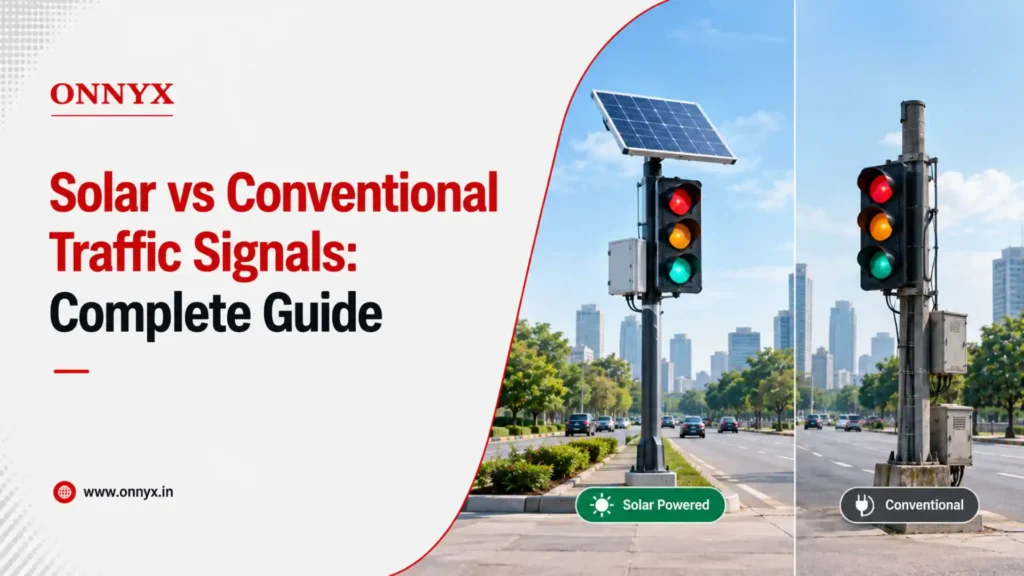
Solar vs Conventional Traffic Signals: Complete Guide
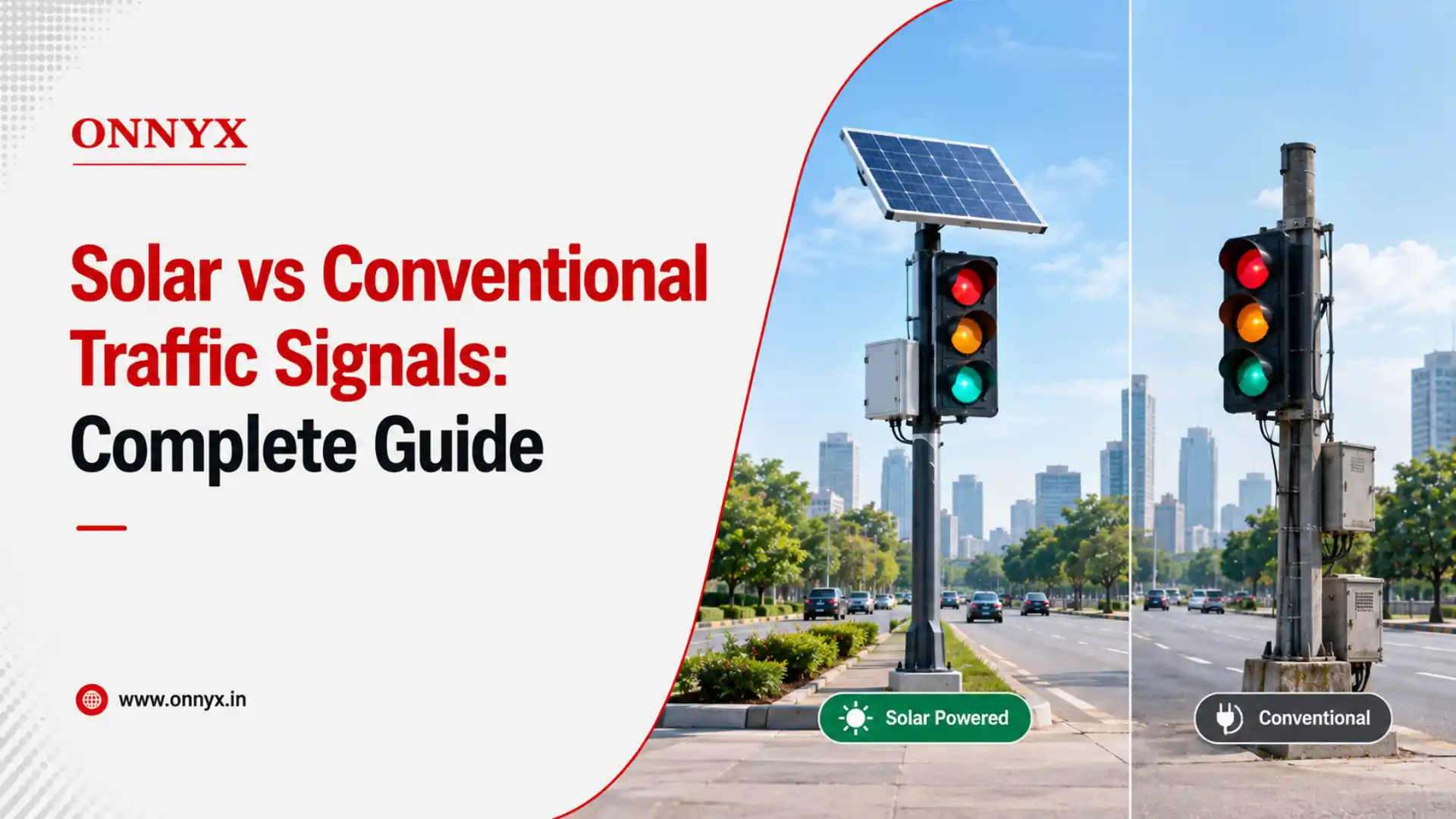
Traffic signal selection is a pivotal decision for modern infrastructure projects, directly impacting urban mobility, public safety, and long-term operational sustainability. As India’s smart cities evolve, authorities must weigh the distinct advantages of solar-powered traffic signals against traditional grid-connected systems. This guide offers a comprehensive comparison, providing municipal corporations, smart city authorities, and infrastructure planners with the insights needed to make informed procurement and modernization choices.
Introduction: The Traffic Signal Technology Decision
Choosing between solar and conventional traffic signals involves evaluating initial investment, operational costs, reliability, and environmental impact. Solar traffic signals operate independently of the electrical grid, drawing power from photovoltaic panels and storing it in batteries, while conventional traffic signals rely on a constant connection to the municipal power supply. India’s Smart Cities Mission has accelerated the adoption of advanced traffic management solutions, with over 75 Integrated Command and Control Centres (ICCCs) actively addressing traffic and transportation issues using systems like Adaptive Traffic Control Systems (ATCS) and Intelligent Traffic Management Systems (ITMS). This guide will help decision-makers navigate the complexities of these systems.
Solar Traffic Signals: Technology Overview
Solar traffic signals function by converting sunlight into electricity, storing it, and using it to power LED signal heads. Key components include photovoltaic panels, a charge controller, battery storage, and energy-efficient LED signal lights as explained by Onnyx Electronisys. The photovoltaic panels generate direct current (DC) electricity during daylight hours. This energy is then regulated by a charge controller before being stored in deep-cycle batteries, which typically offer 5-7 days of autonomous operation without direct sunlight in monsoon-prone regions. Modern systems often use LiFePO4 batteries, which have a longer lifespan of 5-8 years compared to the 3-5 years of traditional lead-acid batteries as highlighted by Onnyx Electronisys. Installation requirements are minimal, avoiding extensive trenching and electrical wiring, making them suitable for rapid deployment.
- Photovoltaic panels capture solar energy, with typical panel power ranging from 20W to 75W for signal units consuming 8-12W.
- Battery storage, often lithium-ion or LiFePO4, ensures continuous operation during night-time or extended cloudy periods, offering 3-7 days of autonomy.
- LED technology in signal heads provides high visibility with low power consumption, enhancing battery life and operational efficiency.
- Installation avoids trenching and utility coordination, significantly reducing deployment time to 2-3 crew days for a full four-way intersection.
- Maintenance involves periodic cleaning of panels, inspection of battery health, and replacement of batteries every 5-8 years, depending on the type per Onnyx Electronisys.
Conventional Traffic Signals: Technology Overview
Conventional traffic signals rely on a direct connection to the electrical grid for their power supply. These systems require robust electrical infrastructure, including trenching, cabling, and connection to a reliable power source. Modern conventional signals utilize energy-efficient LED lights, similar to their solar counterparts, with power consumption typically ranging from 4W to 20W per signal head based on Indian supplier listings. Installation of conventional systems involves significant civil work for underground cabling and coordination with utility providers, often resulting in longer deployment timelines, potentially 8-12 weeks for a new four-way intersection. Their operational reliability is directly tied to the stability of the local power grid. Cities like Delhi have achieved over 99.9% grid reliability, but many other regions in India still experience power fluctuations and outages, especially during extreme weather events.
- Grid-powered operation ensures continuous functionality as long as the electrical supply is stable, drawing power directly from the municipal grid.
- Electrical infrastructure involves extensive trenching, cabling, and secure grid connections, contributing to higher installation complexity and cost.
- Energy consumption, while reduced by LED technology, still incurs recurring electricity bills, which can be substantial over the long term.
- Maintenance protocols include managing wiring faults, metering issues, and power supply disruptions, in addition to LED module upkeep.
- Power dependency means these signals are susceptible to outages unless supplemented by an uninterruptible power supply (UPS) or generator backup.
Solar vs Conventional Traffic Signals: Head-to-Head Comparison
The choice between solar and conventional traffic signals involves a detailed assessment of multiple factors beyond just initial purchase price. A comprehensive total cost of ownership (TCO) analysis is crucial for infrastructure planners. Solar traffic signals generally have higher upfront costs but offer significant long-term savings through reduced energy consumption and lower maintenance, potentially achieving 40-60% lower TCO over a 10-year period in some cases. Conversely, conventional signals have a lower initial capital expenditure but accrue substantial operating costs over their lifespan due to electricity bills and grid-related maintenance. Installation timelines for solar systems are notably shorter, often days compared to weeks or months for conventional systems, as they bypass the need for trenching and utility coordination. From an environmental perspective, solar signals offer a clear advantage by utilizing renewable energy and reducing carbon emissions, aligning with smart city sustainability mandates.
This table compares solar-powered and conventional grid-powered traffic signals across critical technical, financial, and operational parameters to help infrastructure planners make informed procurement decisions.
| Parameter | Solar Traffic Signals | Conventional Traffic Signals |
|---|---|---|
|
Initial Capital Cost
|
Higher initial investment, depending on system specifications and installation requirements.
|
Generally lower initial investment where grid infrastructure is already available.
|
|
Monthly Energy Cost |
Near-zero after installation due to renewable energy generation |
Recurring electricity bills (e.g., 600-800/year in some examples)
|
|
Installation Timeline
|
Faster (2-3 crew days for a full intersection)
|
Longer (8-12 weeks for a full intersection)
|
|
Power Outage Resilience
|
High (operates on battery backup for 3-7 days) Onnyx Electronisys states
|
Low (fails without grid power unless UPS/generator is installed)
|
|
Maintenance Frequency
|
Periodic panel cleaning, battery replacement (5-8 years) per Onnyx Electronisys
|
Wiring checks, grid-related repairs, bulb/LED replacement, metering issues
|
|
Lifespan & Durability |
Solar panels (25-30), LEDs (10+), Batteries (5-8) per Onnyx Electronisys
|
LEDs (10+), Controller (10-15), Infrastructure (20+)
|
|
Environmental Impact
|
Low carbon footprint, utilizes renewable energy, reduces CO₂ emissions (1-2 tons/year per intersection)
|
Higher carbon footprint depending on grid’s energy mix
|
|
Best Deployment Scenario
|
Remote areas, new infrastructure, high trenching costs, unreliable grid, sustainability mandates
|
High-density urban areas with reliable grid, existing infrastructure, centralized control systems
|
When Solar Traffic Signals Make the Most Sense
Solar traffic signals are particularly advantageous in specific geographic and infrastructural contexts. They are ideal for remote locations where extending the electrical grid is prohibitively expensive or impractical, and for new infrastructure projects where the absence of existing grid connections simplifies installation. Solar systems also excel in areas prone to frequent power outages, ensuring continuous operation and minimizing traffic disruption as Onnyx Electronisys highlights. From a financial perspective, solar signals offer superior ROI in scenarios where electricity tariffs are high, leading to significant operational cost savings over their lifespan. Indian smart city projects increasingly integrate solar traffic signals to align with sustainability mandates and reduce reliance on fossil fuels. For instance, Hyderabad’s H-TRIMS smart traffic management system was implemented at 221 intersections, incorporating high-intensity LED signals and solar power battery backup.
- Remote or Off-Grid Locations: Eliminates the need for costly trenching and grid extensions, making deployment faster and more economical.
- Areas with Unreliable Grid Power: Provides uninterrupted operation during power cuts, enhancing safety and traffic flow.
- High Electricity Tariffs: Significantly reduces or eliminates recurring electricity bills, offering long-term operational savings.
- Smart City and Sustainability Goals: Contributes to a greener infrastructure by using renewable energy and reducing carbon emissions.
- Rapid Deployment Needs: Ideal for temporary installations, construction zones, or quickly established intersections due to simplified setup.
When Conventional Traffic Signals Remain Optimal
Conventional traffic signals continue to be the optimal choice in high-density urban environments with highly reliable grid infrastructure. Cities like Delhi, with over 99.9% grid reliability, can leverage existing robust electrical networks without the added complexity of solar power generation and storage. These systems integrate seamlessly with established centralized traffic control systems, which often require consistent, high-power connectivity for advanced features like Adaptive Traffic Control Systems (ATCS) and Red Light Violation Detection (RLVD). For projects with strict budget constraints favoring lower upfront costs, conventional signals might initially appear more attractive, despite higher long-term operational expenses. Their performance is less susceptible to environmental factors like prolonged cloudy weather or monsoon seasons, providing consistent power delivery where grid reliability is consistently high. However, even in these scenarios, modern conventional signals should utilize energy-efficient LED technology to minimize energy consumption.
- Reliable Grid Infrastructure: Optimal where power supply is stable and outages are minimal, ensuring continuous operation without external power generation.
- Existing Centralized Control Systems: Easier integration with complex, grid-dependent ITMS and ATCS solutions that require constant data flow and power.
- High-Density Urban Intersections: Suitable for areas with high traffic volumes and complex signal phasing that demand consistent power and robust control.
- Lower Upfront Capital Expenditure: Initial installation costs can be lower, which may be a deciding factor for projects with tight immediate budgets.
- Limited Space for Solar Panels: In densely built urban areas, finding adequate, unshaded space for solar panels can be challenging.
Making the Right Choice for Your Project
Making the right choice between solar and conventional traffic signals requires a structured decision-making process that considers local conditions, financial parameters, and strategic objectives. Onnyx Electronisys proposes a 3-Factor Decision Matrix to provide procurement teams with a quantitative, defensible framework. This matrix evaluates projects across three weighted dimensions: Infrastructure Context Score, Financial Timeline Score, and Strategic Alignment Score. Onnyx Electronisys supports both solar and conventional traffic signal deployments, offering a comprehensive suite of traffic management solutions tailored to specific project needs. Our expertise as a leading traffic signal manufacturer in India ensures that clients receive reliable, efficient, and future-proof systems.
- Infrastructure Context Score: Evaluate grid reliability, ease of trenching, installation environment (urban, rural, highway), and potential for shading. For instance, a site with poor grid reliability and high trenching costs would score higher for solar.
- Financial Timeline Score: Analyze initial capital expenditure versus total cost of ownership over a 10-year period, considering electricity costs, maintenance, and battery replacement cycles. Projects with higher long-term operational cost sensitivity will favor solar.
- Strategic Alignment Score: Assess alignment with smart city mandates, sustainability goals, carbon reduction targets, and future expansion plans. Projects prioritizing green initiatives and energy independence will score higher for solar.
Conclusion: Strategic Traffic Signal Selection
The strategic selection of traffic signal technology is critical for developing efficient, safe, and sustainable urban infrastructure. While conventional signals remain viable in areas with highly reliable grid infrastructure and established centralized control, solar traffic signals offer compelling advantages in terms of reduced operational costs, rapid deployment, and environmental sustainability, particularly in remote areas or those with unreliable power. The 3-Factor Decision Matrix provides a robust framework for municipal corporations and infrastructure planners to objectively evaluate options. By considering Infrastructure Context, Financial Timeline, and Strategic Alignment, decision-makers can select solutions that are not only cost-effective but also align with broader smart city and sustainability objectives. Onnyx Electronisys is committed to providing advanced traffic management solutions, including both solar and conventional traffic signals, to meet the diverse needs of India’s evolving urban landscape.
Key Takeaways
- Solar traffic signals have higher upfront costs but lower total cost of ownership over 10 years due to minimal energy and maintenance expenses.
- Conventional traffic signals are cheaper initially but incur significant long-term electricity and grid-related maintenance costs.
- Solar installations are significantly faster, often taking days compared to weeks or months for grid-tied systems, as they avoid extensive civil work.
- Solar signals offer superior resilience during power outages, operating on battery backup for 3-7 days, unlike conventional signals that fail without grid power.
- The 3-Factor Decision Matrix (Infrastructure Context, Financial Timeline, Strategic Alignment) provides a quantitative framework for informed procurement decisions.
- Onnyx Electronisys offers both solar and conventional traffic signal solutions, tailored to specific project requirements for intelligent transportation systems.
Key Terms Glossary
Photovoltaic Panels: Devices that convert sunlight directly into electricity, forming the primary power source for solar traffic signals.
Total Cost of Ownership (TCO): A financial estimate that includes the purchase price of an asset plus all associated costs over its entire lifespan, such as operation, maintenance, and replacement.
Adaptive Traffic Control Systems (ATCS): Intelligent systems that adjust traffic signal timings in real-time based on actual traffic demand, reducing congestion and travel times. Explore Learn more.
Intelligent Traffic Management Systems (ITMS): Comprehensive platforms that integrate various technologies like signals, cameras, and sensors to monitor, control, and optimize urban traffic flow.
LiFePO4 Batteries: Lithium iron phosphate batteries, known for their long cycle life, high safety, and stable performance, commonly used in modern solar energy storage systems.
Grid Reliability: The consistency and stability of the electrical power supply from the main utility grid, measured by factors like uptime and frequency of outages.
Red Light Violation Detection (RLVD): A system that uses cameras and sensors to automatically detect vehicles that illegally cross an intersection when the traffic signal is red.
FAQs
Q1. What is the main difference between solar and conventional traffic signals?
The main difference lies in their power source: solar traffic signals generate electricity from photovoltaic panels and store it in batteries for independent operation, while conventional signals draw power directly from the electrical grid.
Q2. Are solar traffic signals more expensive than conventional traffic signals?
Solar traffic signals typically require a higher initial investment than conventional grid-powered systems. However, they can offer long-term operational savings by reducing electricity expenses and minimizing the need for extensive grid infrastructure. The overall cost advantage depends on installation requirements, local electricity tariffs, maintenance needs, and battery replacement cycles.
Q3. How long do solar traffic signals work without sunlight?
Modern solar traffic signals are designed with battery backup systems that can provide 3-7 days of autonomous operation without direct sunlight, ensuring continuous functionality during cloudy weather, monsoon seasons, or night-time as highlighted by Onnyx Electronisys.
Q4. Which is more reliable: solar or conventional traffic signals?
The reliability depends on context: solar signals are more reliable during grid power outages due to their independent power source, while conventional signals are more reliable in areas with consistently stable and high-quality grid power, such as Delhi’s 99.9% reliability.
Q5. What are the maintenance requirements for solar traffic signals?
Maintenance for solar traffic signals includes periodic cleaning of solar panels, routine checks of battery health, and battery replacement typically every 5-8 years for advanced lithium-ion batteries as explained by Onnyx Electronisys. Explore Learn more.