
Traffic Light Price in India: Complete Buyer’s Guide
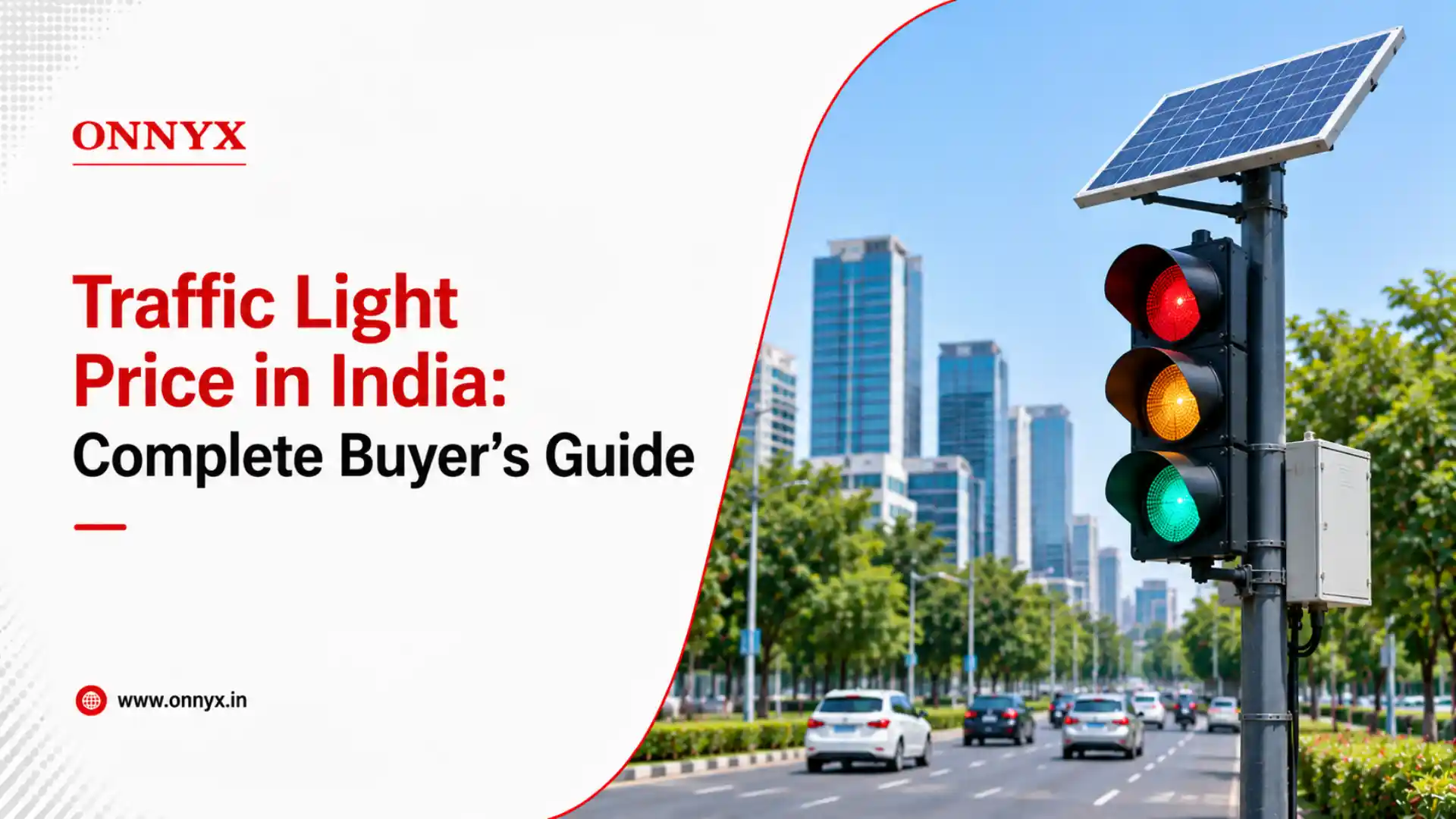
Navigating the procurement of traffic signal systems in India requires a comprehensive understanding of costs beyond initial unit prices. Municipal corporations, smart city authorities, and traffic police departments evaluating infrastructure projects must consider specifications, compliance, and long-term total cost of ownership.
This guide provides a detailed breakdown of traffic light pricing in India, leveraging the 4-Layer Cost Framework. This framework evaluates investments across (1) Acquisition Cost, (2) Operational Cost, (3) Compliance Cost, and (4) Opportunity Cost, demonstrating how the lowest bid can often lead to significantly higher expenses over time.
Traffic Light Price by Type: A Market Overview
Traffic light prices in India vary depending on product specifications, technology, installation requirements, and project complexity. Understanding these differences helps buyers choose the right solution for their traffic management needs.
- LED Traffic Signal Lights: The price of LED traffic signal heads depends on signal size, lens configuration, visibility requirements, housing materials, energy efficiency, and expected operating life.
- Solar-Powered Traffic Signals: Solar traffic signal system costs depend on solar panel capacity, battery technology, controller specifications, backup requirements, and installation infrastructure.
- Vehicle-Actuated and Adaptive Traffic Signals: Vehicle-actuated signals and Adaptive Traffic Control Systems (ATCS) require additional technology, including vehicle detectors, intelligent controllers, communication equipment, and traffic monitoring capabilities. The final investment depends on system functionality and integration requirements.
- Pedestrian Signals and Specialized Equipment: Pedestrian signal heads, countdown timers, and emergency vehicle preemption systems have different pricing structures depending on their features, compatibility, and intended applications.
- Traffic Signal Project Costs: Complete project costs depend on the number of intersections, equipment quantities, civil works, installation, software integration, and ongoing maintenance. Buyers should request a detailed quotation based on their technical requirements and site conditions.
Onnyx Electronisys offers traffic management solutions for projects with different operational and technical requirements. Buyers can evaluate the appropriate solution based on application, compliance requirements, installation needs, and long-term performance expectations.
Cost Factors That Impact Traffic Signal Pricing
Several critical factors influence the final price of traffic signal systems, extending beyond the basic unit cost. Understanding these elements is essential for accurate budgeting and procurement.
- Technical Specifications: The quality of LED modules, visibility range, beam angle, and operational lifespan (e.g., 50,000+ hours) directly correlate with price.
- Power Source Considerations: Grid-connected systems have lower hardware costs but incur ongoing electricity charges, while solar-powered systems have higher upfront costs but offer long-term energy independence.
- Controller Complexity: Fixed-time controllers are less expensive than advanced vehicle-actuated or adaptive ATCS controllers, which integrate with sensors and real-time data.
- Compliance Requirements: Adherence to BIS standards (like IS 10322 for LED luminaires), IP ratings (e.g., IP65 for dust and water protection), and other government certifications adds to manufacturing costs but ensures reliability.
- Installation Infrastructure: Costs include poles, foundations, cabling (especially for grid-connected systems), and civil works, which can significantly impact the overall project expense.
A recent municipal specification document emphasizes the need for operation in -10°C to +60°C ambient conditions with 0–95% relative humidity, directly influencing material and component choices.
Solar vs. Grid-Powered Traffic Lights: Total Cost Analysis
Choosing between solar-powered and grid-powered traffic signals requires an evaluation of initial investment, operating expenses, maintenance requirements, and long-term performance.
Solar-powered traffic signals can reduce dependence on grid electricity and are particularly useful in locations with unreliable power supplies or limited electrical infrastructure. Their overall cost depends on solar panel capacity, battery technology, sunlight availability, backup requirements, and installation conditions.
Grid-powered traffic signals may be suitable where a reliable electricity supply is available. However, buyers should account for utility connections, electricity consumption, underground cabling, and associated maintenance requirements.
Maintenance Considerations: Solar systems require periodic panel cleaning, battery inspections, and battery replacement when necessary. Grid-powered systems require appropriate electrical inspections, controller maintenance, and repairs to cabling and other components.
Long-Term Cost Evaluation: The most economical solution depends on local electricity tariffs, environmental conditions, system reliability, component lifespan, and maintenance arrangements. Procurement teams should compare supplier quotations and calculate total cost of ownership over the expected operating life.
Onnyx Electronisys can be considered when evaluating traffic management solutions based on project specifications, operational requirements, and long-term support needs.
| Cost Factor | Grid-Powered Traffic Signal | Solar-Powered Traffic Signal |
|---|---|---|
|
Initial Equipment Cost
|
Depends on signal specifications, controller type, and equipment configuration.
|
Depends on solar panels, batteries, controllers, and system capacity.
|
|
Installation and Civil Works
|
May require utility connections, trenching, underground cabling, and foundations.
|
May require panel mounting structures, foundations, and electrical installation.
|
|
Electricity Costs
|
Ongoing electricity expenses depend on local tariffs and system consumption.
|
Reduces dependence on grid electricity, subject to system configuration.
|
|
Maintenance Requirements
|
Electrical inspections, controller servicing, and cabling repairs.
|
Panel cleaning, battery inspections, and component replacement.
|
|
Total Cost of Ownership
|
Depends on equipment, electricity, installation, and maintenance expenses.
|
Depends on equipment, battery replacement, maintenance, and energy savings.
|
|
Payback Period
|
Requires a defined alternative and project-specific cost comparison.
|
Depends on local energy costs, solar performance, maintenance, and initial investment.
|
Complete Intersection Cost Breakdown
The total cost of installing a traffic signal system at a four-way intersection depends on equipment specifications, site conditions, installation complexity, and integration requirements.
- Intersection Equipment: A typical system may include LED traffic signal heads, traffic signal controllers, poles, pedestrian signals, and vehicle detectors. The required equipment depends on traffic volume, road layout, and operational needs.
- Civil Works and Installation: Site preparation may involve pole foundations, underground cabling, ducting, trenching, electrical connections, installation, testing, and commissioning. Existing infrastructure and site accessibility can affect the scope of work.
- System Integration: Smart city projects may require integration with Adaptive Traffic Control Systems (ATCS), central monitoring platforms, traffic sensors, and supervisory control and data acquisition (SCADA) systems. Integration requirements depend on the existing infrastructure and the desired level of automation.
- Overall Project Cost: Standard intersections and intelligent traffic signal installations have different cost structures. The total investment depends on equipment selection, civil works, software, communications infrastructure, commissioning, and maintenance requirements.
- Project Evaluation: When reviewing previously completed projects or published tender values, confirm whether the quoted amount covers equipment alone or includes installation, civil works, software integration, and ongoing support. Request an itemized quotation to understand the complete project scope.
Onnyx Electronisys supports traffic management requirements through solutions that can be evaluated according to project specifications, technical needs, and deployment conditions.
How to Evaluate Traffic Light Manufacturers in India
Selecting the right traffic light manufacturer is crucial for project success, reliability, and long-term performance. Focus on certifications, manufacturing capabilities, and after-sales support.
- Critical Certifications: Ensure manufacturers hold BIS approval for LED lighting products (IS 10322 Part 5/Section 3), AIS standards compliance, and relevant IP ratings (e.g., IP65 or IP66) for weather resilience.
- Manufacturing Capability vs. Trading Companies: Before selecting a traffic signal supplier, verify its manufacturing capabilities, in-house quality control processes, technical expertise, and after-sales support. Onnyx Electronisys provides traffic management solutions for projects requiring reliable equipment, technical support, and end-to-end project assistance. Buyers should evaluate product specifications, compliance requirements, warranty coverage, and service capabilities to select the right solution for their needs.
- After-Sales Support, Warranty Terms, and Spare Parts Availability: A strong warranty (typically 3-5 years for major components) and readily available spare parts are vital for minimizing downtime and ensuring continuous operation.
- Reference Projects and Government Tender Experience: Look for manufacturers with a proven track record of successful installations in similar government projects and extensive experience with public procurement processes.
The BIS standard for components of Intelligent Traffic Management Systems (ITMS) covers functional, performance, technical, interoperability, and reliability requirements, underscoring the importance of compliant solutions.
Procurement Best Practices for Government Bodies
Government bodies can optimize traffic signal procurement by adopting strategic best practices that prioritize total cost of ownership and long-term value. Avoiding lowest-bid traps is key to ensuring quality and efficiency.
- Technical Specifications in Tenders: Clearly define technical specifications, including LED luminosity, power consumption, IP rating, operating temperature range, and communication protocols. This ensures quality and interoperability, aligning with the “Compliance Cost” layer of the 4-Layer Cost Framework.
- Avoiding Lowest-Bid Traps: Implement lifecycle cost evaluation frameworks that consider acquisition costs, energy consumption, maintenance requirements, component replacement, and potential expenses caused by system downtime or poor performance. A lower initial bid does not necessarily represent the best long-term value. Government buyers should compare technical specifications, expected operating life, warranty coverage, service commitments, and total cost of ownership before selecting a supplier.
- Pilot Testing and Performance Guarantees: Mandate pilot testing for complex or new technologies like ATCS before full-scale deployment. Require performance guarantees for system uptime, traffic flow improvement, and energy efficiency.
- GeM Portal Considerations and Rate Contract Advantages: Leverage the Government e-Marketplace (GeM) portal for transparent procurement and explore rate contracts for standardized equipment to streamline purchases and ensure competitive pricing.
NHAI’s procurement model emphasizes technical requirements and service-level parameters, using a two-stage process for complex projects. Explore Learn more.
Key Takeaways
- Traffic light prices in India depend on equipment type, technical specifications, installation requirements, and project complexity.
- The Four-Layer Cost Framework—Acquisition Cost, Operational Cost, Compliance Cost, and Opportunity Cost—helps buyers evaluate the complete financial impact of a traffic signal project.
- Solar-powered traffic signals can reduce dependence on grid electricity, while their suitability depends on local conditions, battery requirements, and maintenance needs.
- Relevant BIS standards, applicable technical specifications, suitable IP ratings, and reliable after-sales support are important considerations when selecting traffic signal equipment.
- Complete intersection installations require careful planning for equipment, civil works, system integration, testing, and commissioning.
- Government procurement teams should prioritize lifecycle cost analysis, technical compliance, warranty coverage, and performance guarantees rather than relying solely on the initial purchase price.
Conclusion: Making Smart Investment Decisions
Effective procurement of traffic signal systems in India demands a strategic shift from merely evaluating unit prices to embracing a total cost of ownership (TCO) approach. While initial costs for advanced solutions like solar-powered or adaptive traffic signals may seem higher, their long-term operational savings, enhanced reliability, and reduced congestion translate into significant value. This aligns with the 4-Layer Cost Framework, which highlights that initial savings from low bids are often negated by higher operational and opportunity costs over time.
For instance, solar systems are a sound investment in areas with unreliable grid power or high electricity costs, offering a rapid ROI. Partnering with established traffic signal manufacturers like Onnyx Electronisys ensures access to BIS-compliant, high-quality products, comprehensive after-sales support, and expertise in deploying intelligent traffic management solutions. Onnyx provides robust traffic management solutions for smart cities, including adaptive pedestrian crossing systems and automatic incident detection systems, designed for India’s unique traffic conditions. This partnership approach helps government bodies achieve safer, more efficient, and sustainable urban mobility ecosystems.
Key Terms Glossary
Adaptive Traffic Control Systems (ATCS): Advanced systems that dynamically adjust traffic signal timings in real-time based on actual traffic conditions detected by sensors.
Bureau of Indian Standards (BIS): India’s national standards body responsible for product certification, ensuring quality and safety standards for various goods, including traffic signal equipment.
Government e-Marketplace (GeM): An online platform for public procurement in India, enabling government departments to purchase goods and services transparently and efficiently.
IP Rating (Ingress Protection Rating): A standard that defines the degree of protection provided by electrical enclosures against intrusion from solid objects (like dust) and liquids (like water).
Intelligent Transport Systems (ITS): Integrated applications of information and communications technology to improve safety, efficiency, and sustainability in transportation networks.
Total Cost of Ownership (TCO): A financial estimate that includes the purchase price of an asset plus the costs of operation, maintenance, and disposal over its lifespan.
Vehicle-Actuated Traffic Signals: Traffic signals that adjust their timing based on the detection of vehicles on different approaches, optimizing flow at intersections.
FAQs
Q1. What is the average price of a traffic light in India in 2026?
The price of a traffic light in India in 2026 depends on the type of signal, equipment specifications, controller technology, and installation requirements. Individual LED signal heads generally have different cost structures from complete solar-powered systems and advanced adaptive traffic signal installations. For an accurate estimate, request a quotation based on your required specifications and project scope.
Q2. How much does it cost to install a complete traffic signal system at one intersection?
The cost of installing a complete traffic signal system at an intersection depends on the number of signal heads, controller specifications, poles, civil works, cabling, installation, and commissioning requirements. Smart adaptive systems may also require traffic detectors, communications infrastructure, software, and integration with central monitoring platforms. Request an itemized project quotation to determine the total installation cost. Explore Learn more.
Q3. Are solar traffic lights more expensive than regular traffic lights?
Solar traffic lights may require a higher initial investment because they include solar panels, batteries, charge controllers, and mounting infrastructure. However, they can reduce dependence on grid electricity and may be beneficial in areas with unreliable power supplies. The most suitable option depends on local conditions, equipment specifications, maintenance requirements, and total cost of ownership.
Q4. What certifications should I look for when buying traffic lights in India?
When buying traffic lights in India, look for mandatory BIS approval, compliance with AIS standards, and an IP65/IP66 rating for weather resistance. These certifications ensure product quality, durability, and reliable performance in diverse Indian climatic conditions.
Q5. Which is better for smart city projects: fixed-time or adaptive traffic signals?
The choice between fixed-time and adaptive traffic signals depends on traffic patterns, intersection complexity, and operational requirements. Fixed-time systems are often suitable for locations with predictable traffic flows. Adaptive Traffic Control Systems (ATCS) can adjust signal timings based on detected traffic conditions and may be beneficial at intersections with changing traffic demand. Selection should consider integration requirements, technical capabilities, maintenance, and expected performance benefits.