
Urban mobility in Indian cities faces unprecedented challenges, with persistent congestion impacting productivity and quality of life. As smart city initiatives accelerate, Intelligent Traffic Management Systems (ITMS) are emerging as critical infrastructure to transform urban transportation. These systems provide the data-driven capabilities necessary for efficient, safe, and sustainable urban environments.
Onnyx Electronisys is at the forefront of enabling cities to transition to advanced, data-driven traffic management, offering comprehensive solutions that address the complexities of modern urban mobility. By integrating cutting-edge technologies, ITMS solutions are no longer optional but a fundamental requirement for future-ready smart cities.
What Makes ITMS Essential for Smart City Development?
Intelligent Traffic Management Systems (ITMS) are essential because they provide cities with the real-time insights and adaptive control mechanisms needed to manage complex urban traffic flows dynamically. Traditional traffic control methods, often reliant on fixed-time signals, cannot effectively respond to the dynamic and unpredictable nature of modern urban traffic patterns, which is why smart cities are prioritizing intelligent transportation infrastructure.
ITMS integrates core capabilities such as real-time monitoring, adaptive signal control, AI-powered analytics, and incident detection with broader smart city infrastructure like Integrated Command and Control Centers (ICCC) and IoT networks. This integration shifts urban traffic management from a reactive approach to a predictive one, enabling proactive decision-making and continuous optimization.
Traditional Traffic Control vs. ITMS: Capability Comparison
This table compares conventional traffic management approaches with modern Intelligent Traffic Management Systems across key operational dimensions, demonstrating why ITMS is essential for smart city development.
Capability | Traditional Traffic Control | Intelligent Traffic Management Systems (ITMS) | Impact on Smart Cities |
Traffic Signal Management | Fixed-time signaling, manual adjustments | Adaptive signal control, AI-powered optimization, real-time adjustments based on traffic flow | Reduced congestion, optimized travel times, improved intersection efficiency |
Incident Detection & Response | Manual reporting, delayed response | Automated detection via video analytics and sensors, rapid alerts, coordinated emergency response | Faster incident clearance, enhanced public safety, minimized secondary congestion |
Data Collection & Analytics | Limited, historical data, manual aggregation | Real-time data streams from sensors and cameras, AI-powered analytics, predictive modeling | Data-driven urban planning, performance benchmarking, continuous system optimization |
Enforcement Capabilities | Manual policing, limited coverage | Automated Traffic Enforcement Systems (ATES), AI-powered violation detection, e-challan integration | Increased compliance, enhanced road safety, improved operational efficiency for police |
Scalability & Integration | Standalone systems, difficult to expand | Modular architecture, API-driven integration with ICCC and other smart city platforms | Future-ready infrastructure, seamless expansion, holistic city management |
Operational Efficiency | Labor-intensive, reactive problem-solving | Automated processes, predictive insights, optimized resource allocation for traffic authorities | Improved operational efficiency and optimized resource utilization, more effective deployment of personnel, improved service delivery |
Key Benefits ITMS Delivers to Urban Environments
ITMS delivers significant advantages to urban environments by addressing critical challenges in mobility, safety, and sustainability. These systems are instrumental in creating more livable and efficient smart cities.
- Congestion Reduction: ITMS actively reduces traffic jams by optimizing signal timings in real-time, leading to quantifiable improvements in traffic flow and commute times. For instance, AI-enabled Adaptive Traffic Control Systems have led to a 30% improvement in peak-hour vehicle throughput in Agartala and a 25% reduction in congestion incidents in Tumakuru.
- Enhanced Road Safety: AI-powered traffic monitoring has significantly improved automated traffic violation detection and enforcement efficiency in several Indian cities.
- Operational Efficiency: ITMS streamlines operations for traffic police and municipal authorities through automated monitoring and data-driven insights. This allows for more strategic deployment of personnel and resources.
- Environmental Impact: Optimized traffic flow reduces idling, leading to lower fuel consumption and greenhouse gas emissions. Adaptive signal control systems have shown potential for a 6.65% reduction in annual road-traffic CO₂ emissions across congested cities.
- Data-Driven Decision-Making: The rich data generated by ITMS provides valuable insights for urban planning, infrastructure investment, and policy formulation, moving cities towards truly intelligent urban management.
Critical ITMS Components That Power Smart Cities
Effective ITMS solutions are built upon a foundation of interconnected technologies that work synergistically to manage urban traffic. These components enable real-time adaptation and intelligent decision-making.
- Adaptive Traffic Signal Control: These systems dynamically adjust signal timings based on real-time traffic demand, significantly improving intersection efficiency. The Bengaluru Adaptive Traffic Control System aims to reduce travel time by up to 25%.
- AI-Powered Video Analytics: Utilizing cameras and artificial intelligence, these analytics detect, classify, and analyze vehicle behavior, pedestrian movements, and traffic density. This enables proactive management and incident detection.
- Integrated Command and Control Centers (ICCC): ICCCs serve as the central nervous system for smart cities, providing a unified platform for monitoring and managing various urban services, including traffic. All 100 Smart Cities in India have operationalized ICCCs.
- Automated Traffic Enforcement Systems (ATES): ATES uses technology like ANPR (Automatic Number Plate Recognition) and red-light violation detection to automate the identification and processing of traffic infractions. This enhances compliance and supports road safety initiatives.
- Real-time Data Collection and Analytics Platforms: These platforms collect vast amounts of traffic data, process it using advanced algorithms, and provide actionable insights for continuous system optimization and urban planning.
How Indian Cities Are Implementing ITMS Successfully
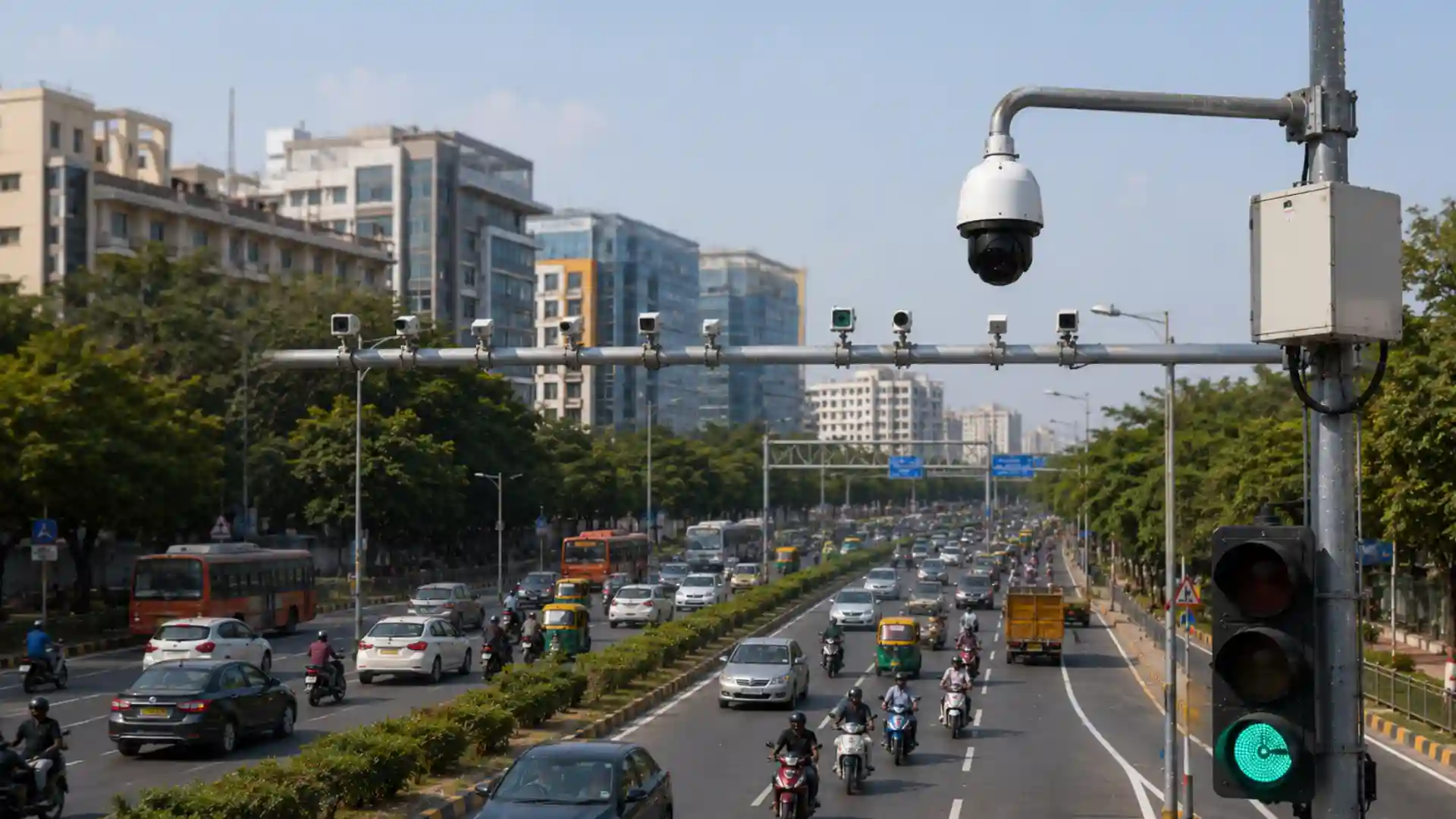
Indian cities are increasingly deploying ITMS as a core component of their Smart Cities Mission initiatives, demonstrating measurable outcomes in urban mobility. These implementations often follow a phased deployment approach, starting with pilot zones before scaling up. Explore Learn more.
For example, in Kerala, AI-powered enforcement systems deployed across 675 locations have led to a significant reduction in fatal accidents and improved compliance. Cities implementing Intelligent Traffic Management Systems have reported improvements in average travel speeds, reduced congestion, and better traffic flow through adaptive traffic management technologies.
Choosing the Right ITMS Partner for Your Smart City Project
Selecting the appropriate ITMS solution provider is critical for the long-term success of any smart city project. This decision should be based on a comprehensive evaluation of technical capabilities, integration expertise, and support infrastructure.
Onnyx Electronisys offers comprehensive ITMS solutions that address the full spectrum of urban traffic management needs, from advanced traffic signal control to intelligent surveillance and enforcement. Our proven deployment experience with government agencies and municipal bodies, coupled with a focus on scalability and future-readiness, ensures that systems can evolve with city growth and technological advancements. When evaluating partners, cities should prioritize providers with a track record of implementing robust, reliable, and integrated solutions that align with the city’s strategic objectives for smart urban development.
The Smart City Readiness Framework: A Phased Approach to ITMS Implementation
Effective ITMS deployment requires a clear understanding of a city’s current capabilities and a strategic roadmap for implementation. The Smart City Readiness Framework provides a three-tier assessment model to guide this process, evaluating a city’s preparedness across crucial layers. Explore Learn more.
This framework enables cities to identify their current position and create a phased roadmap, distinguishing between those ready for full ITMS deployment versus those needing foundational infrastructure upgrades first. For instance, a Tier-2 Indian city with a 2.5 million population, following this staged implementation approach, A phased implementation approach can help cities improve traffic flow, optimize enforcement operations, and enhance overall traffic management performance as deployments mature.
- Infrastructure Layer Assessment: This initial phase evaluates the existing physical infrastructure, including the availability of sensors, cameras, and network connectivity. It identifies gaps in foundational elements required for ITMS operation.
- Operations Layer Evaluation: This tier assesses the city’s operational capabilities, focusing on the readiness of Integrated Command and Control Centers (ICCC), personnel training, and existing traffic management protocols. It determines the city’s capacity to manage and utilize ITMS effectively.
- Intelligence Layer Readiness: The final phase examines the city’s data analytics maturity and AI readiness. This includes assessing the ability to process large datasets, implement AI-powered predictive analytics, and integrate advanced decision-support systems.
Key Takeaways
- Indian cities face severe traffic congestion, with Bengaluru and Pune ranking among the most congested globally, necessitating advanced solutions.
- ITMS transitions urban traffic management from reactive to predictive, integrating real-time monitoring, adaptive control, and AI-powered analytics.
- Benefits include significant congestion reduction (e.g., 30% throughput improvement in Agartala), enhanced road safety (87% automated violation detection in Bengaluru), and reduced emissions.
- Critical components like Adaptive Traffic Signal Control, AI Video Analytics, and Integrated Command and Control Centers form the backbone of modern ITMS.
- The Smart City Readiness Framework provides a structured approach for phased ITMS implementation, ensuring foundational readiness before full deployment.
- Choosing an experienced ITMS partner with proven integration expertise and a focus on scalability is crucial for long-term success.
Conclusion: Building Future-Ready Transportation Infrastructure
As Indian cities continue their rapid urbanization, the demand for efficient, safe, and sustainable urban mobility will only intensify. Intelligent Traffic Management Systems are not merely technological upgrades; they are foundational infrastructure for sustainable urban development, helping cities build safer, more efficient, and more sustainable transportation infrastructure.
The transition to intelligent, connected, and data-driven transportation ecosystems is paramount for enhancing liveability and economic productivity. Smart city authorities are urged to evaluate and implement comprehensive ITMS solutions to build future-ready transportation networks. Partnering with experienced providers like Onnyx Electronisys accelerates this smart city transformation, ensuring robust, scalable, and effective mobility solutions for years to come.
Key Terms Glossary
Intelligent Traffic Management Systems (ITMS): A comprehensive technology solution that uses data, sensors, and AI to optimize traffic flow, enhance safety, and improve urban mobility.
Adaptive Traffic Signal Control: A system that dynamically adjusts traffic light timings in real-time based on actual traffic demand and conditions at intersections.
AI-Powered Video Analytics: Technology that uses artificial intelligence to analyze video feeds from cameras for traffic detection, classification, and behavior analysis.
Integrated Command and Control Center (ICCC): A centralized platform that integrates and manages data from various smart city systems, providing a common operational picture for urban governance.
Automated Traffic Enforcement Systems (ATES): Technology-driven systems that automatically detect and record traffic violations, such as red-light running or speeding, for enforcement purposes.
Smart City Readiness Framework: A structured assessment model that evaluates a city’s preparedness for ITMS implementation across infrastructure, operations, and intelligence layers.