
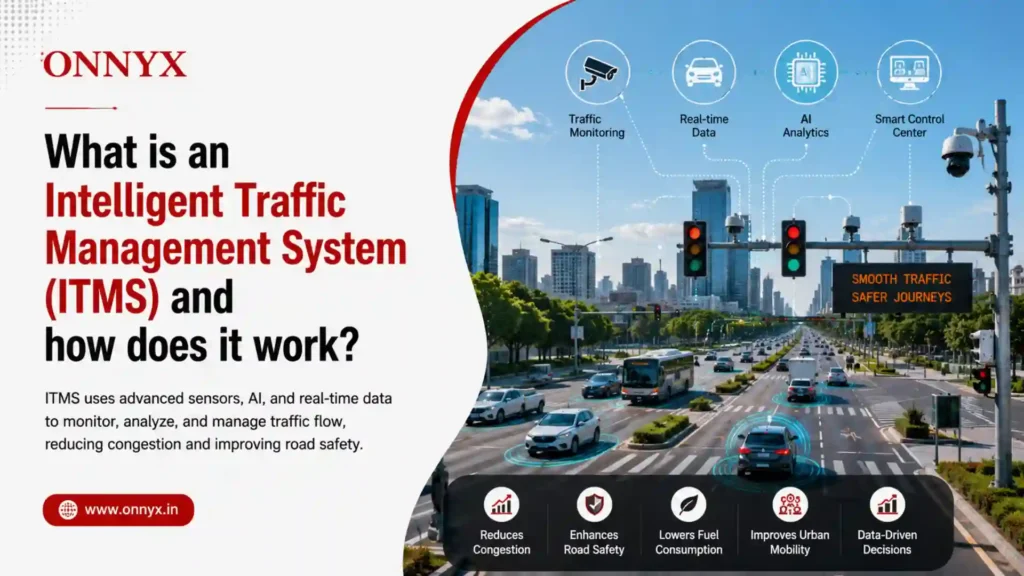
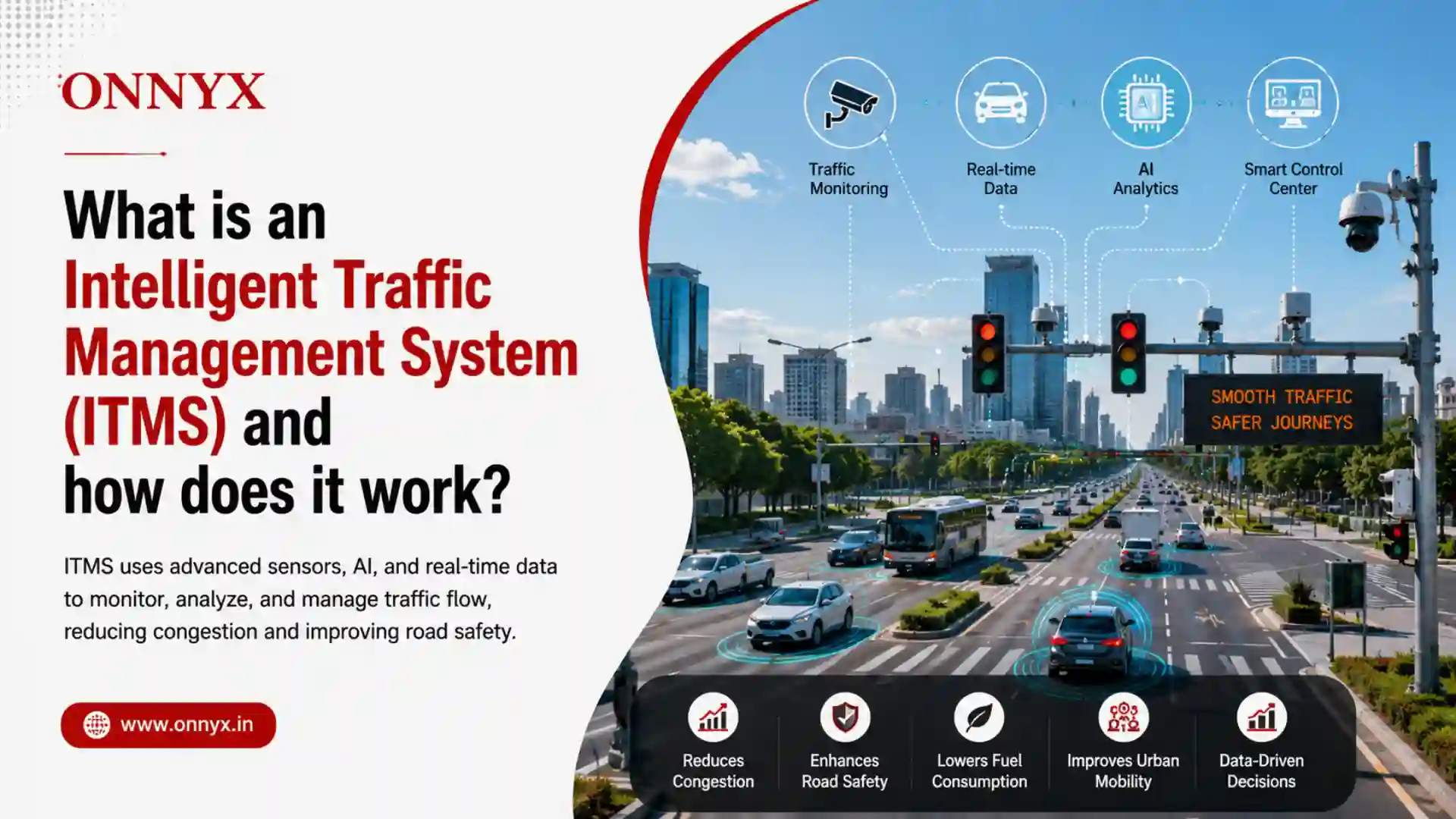
What is an Intelligent Traffic Management System (ITMS) and how does it work?
Urban mobility challenges in India’s rapidly expanding cities demand a paradigm shift in traffic control. With major cities like Bengaluru experiencing a 74.4% congestion level and Mumbai commuters losing 126 hours annually to rush hour traffic, traditional signal systems are demonstrably inadequate for managing dynamic traffic flows. This pressing need for efficiency and safety drives the adoption of Intelligent Traffic Management Systems (ITMS) as foundational smart city infrastructure. Intelligent Traffic Management Systems (ITMS) represent an advanced, integrated approach to urban traffic control, leveraging cutting-edge technologies to optimize traffic flow, enhance road safety, and improve overall urban mobility. Unlike conventional, fixed-time signal systems, ITMS dynamically adapts to real-time traffic conditions, providing a comprehensive solution for modern urban environments.
What is an Intelligent Traffic Management System (ITMS)?
An Intelligent Traffic Management System (ITMS) is a comprehensive, technology-driven platform that integrates various sensors, communication networks, and artificial intelligence (AI) to monitor, analyze, and control urban traffic flow in real-time. Its core purpose is to mitigate congestion, reduce travel times, enhance public safety, and improve the efficiency of transportation networks. This system fundamentally differs from conventional traffic signal systems, which typically operate on pre-set timers or simple demand-actuated logic. ITMS incorporates key technological components including AI, advanced video analytics, a network of diverse sensors, and adaptive control algorithms to create a unified traffic ecosystem. This integration of sophisticated hardware and intelligent software allows for proactive rather than reactive traffic management, making it an indispensable tool for urban development officials. The India ITMS market is projected to reach approximately USD 460–480 million in 2026, growing at a CAGR of 21.3%–23.1%, underscoring its rapid adoption in the region.
Core Components of an ITMS Infrastructure
ITMS infrastructure comprises a suite of interconnected technologies designed for real-time data collection, analysis, and responsive action. These components work synergistically to create a dynamic and efficient traffic management environment.
- Adaptive Traffic Signal Control: These systems utilize real-time data from sensors and cameras to adjust signal timings dynamically, optimizing green light durations based on actual vehicle and pedestrian demand. Adaptive systems have demonstrated travel time reductions of 10–50%.
- Video Analytics and AI-powered Surveillance: AI-enabled cameras perform real-time video analysis for incident detection, traffic flow monitoring, vehicle classification, and pedestrian safety. AI video analytics for traffic monitoring achieve vehicle detection accuracy rates of 97–100% in operational settings, with leading commercial platforms reporting over 99% accuracy for traffic counts.
- Integrated Command and Control Centers (ICCC): These centralized hubs serve as the nerve center for ITMS, aggregating data from all components to provide a holistic view of urban traffic. ICCCs enable operators to monitor traffic, manage incidents, and coordinate responses across various city departments.
- Automated Traffic Enforcement Systems (ATES): This includes Red Light Violation Detection (RLVD), Automatic Number Plate Recognition (ANPR), and speed detection cameras that automatically identify and record traffic infractions. These systems enhance road safety and compliance, with AI traffic systems achieving 95.3% violation accuracy.
- Communication Networks and IoT Connectivity: Robust, secure communication networks, often leveraging 5G and IoT, facilitate seamless data exchange between roadside units, sensors, and the ICCC. This connectivity is crucial for real-time decision-making and system-wide coordination.
How Does an ITMS Work? The Operational Framework
The operational effectiveness of an ITMS relies on a continuous cycle of data collection, processing, decision-making, and action, forming a sophisticated closed-loop system. This process ensures that traffic management is always responsive to current conditions.
- Data Collection: Sensors, cameras, and detection systems deployed across the road network continuously gather real-time data on vehicle counts, speeds, queue lengths, and occupancy. This raw data forms the foundation of all subsequent ITMS operations.
- Real-time Data Processing and AI-driven Decision-making: Collected data is fed into the ICCC where AI algorithms and machine learning models analyze traffic patterns, predict congestion, and identify anomalies. This intelligence enables the system to make informed decisions about signal timing and resource allocation.
- Adaptive Signal Timing Adjustments: Based on the AI’s analysis, traffic signals are dynamically adjusted to optimize flow. This includes extending green lights for heavy traffic, shortening cycles during low demand, and coordinating signals across entire corridors to maintain smooth progression.
- Incident Detection, Alert Generation, and Coordinated Emergency Response: The system automatically detects incidents such as accidents, stalled vehicles, or unusual congestion patterns using video analytics. Alerts are generated, and the system can coordinate with emergency services, providing real-time information for faster response.
- Integration with Traffic Police Operations and Enforcement: ITMS integrates with police workflows, providing real-time surveillance feeds, automated enforcement data, and actionable insights for deploying personnel effectively. This reduces manual workload and improves response times for violations and incidents.
Traditional Traffic Systems vs. Intelligent Traffic Management Systems (ITMS)
This comparison highlights the fundamental differences between conventional traffic control and modern ITMS infrastructure, demonstrating why government authorities are transitioning to intelligent systems for improved efficiency, safety, and data-driven decision-making.
Feature/Capability | Traditional Traffic Systems | Intelligent Traffic Management Systems (ITMS) |
Signal Timing Method | Fixed-time plans or simple pre-programmed actuation | Dynamic, real-time adaptive control based on current demand and AI predictions |
Traffic Data Collection | Limited, often manual counts or basic loop detectors | Comprehensive, real-time data from AI cameras, sensors, ANPR, and connected vehicles |
Incident Detection | Manual observation or citizen reports, often delayed | Automated, AI-powered real-time detection and alerts |
Enforcement Capabilities | Manual enforcement by traffic police at intersections | Automated Red Light, Speed, and ANPR violation detection with e-challan integration |
System Adaptability | Very low; requires manual reprogramming for changes | High; self-learning algorithms adapt to evolving traffic patterns and events |
Operational Visibility | Fragmented, localized views with limited central oversight | Centralized, holistic view across entire city via ICCC dashboards |
Infrastructure Integration | Standalone systems, minimal inter-departmental communication | Seamless integration with ICCC, emergency services, public transport, and smart city platforms |
Cost Efficiency Over Time | High operational costs due to inefficiency and manual intervention | Lower operational costs, significant ROI from congestion reduction, fuel savings, and reduced accidents |
Key Benefits of Implementing ITMS in Smart Cities
Implementing an ITMS offers a multitude of benefits that directly address the core challenges faced by urban authorities in managing traffic and ensuring public safety. These advantages are crucial for fostering sustainable urban growth and improving the quality of life for citizens.
- Measurable Reduction in Traffic Congestion: ITMS typically reduces urban congestion by 20–30%, with peak reductions reaching 35% in high-density areas. This translates to shorter commute times and improved journey reliability.
- Enhanced Road Safety: Automated enforcement systems and real-time incident detection significantly reduce accidents. ITMS can reduce traffic conflicts by up to 40% compared to conventional actuated control systems.
- Improved Operational Efficiency: Centralized management through ICCCs and automated processes streamline operations for traffic police and municipal authorities, enabling data-driven deployment and faster response.
- Data-driven Insights for Urban Planning: The rich data collected by ITMS provides invaluable insights into traffic patterns, helping urban planners make informed decisions for future infrastructure development and policy formulation.
- Environmental Benefits: Reduced idling and smoother traffic flow lead to an 8–18% reduction in CO₂ emissions and 10–12% less fuel consumption as observed in urban ITMS implementations.
ITMS Implementation: Technology Requirements and Deployment
Successful ITMS deployment necessitates careful planning, robust infrastructure, and strategic integration with existing smart city frameworks. The technology requirements are multi-faceted, encompassing hardware, software, and communication layers.
- Infrastructure Prerequisites: This includes the deployment of high-resolution cameras, various types of sensors (e.g., radar, lidar, inductive loops), communication conduits (fiber optics, wireless), and power infrastructure at strategic locations.
- Technology Stack Considerations: A modern ITMS typically uses a hybrid edge-cloud architecture for data processing. Edge computing at intersections enables low-latency decisions for adaptive signals, while cloud platforms handle large-scale data aggregation, analytics, and long-term storage.
- Integration with Existing Smart City Infrastructure: ITMS must seamlessly integrate with Integrated Command and Control Centers (ICCCs), public transport systems, emergency services, and other smart city platforms to foster a truly connected urban ecosystem. All 100 original Smart Cities in India now have operational ICCCs according to the Ministry of Housing and Urban Affairs (2026).
- Scalability Considerations: Phased rollout across city zones is a common strategy, requiring a scalable architecture that can expand from pilot corridors to city-wide coverage without compromising performance.
Onnyx ITMS Solutions: Powering Smarter Traffic Infrastructure
Onnyx stands as a leading provider of comprehensive Intelligent Traffic Management System solutions, with over a decade of experience in delivering advanced traffic management to Indian cities. Our platform is engineered to meet the complex demands of urban mobility, partnering with government agencies, traffic police, and smart city authorities. Onnyx’s ITMS platform uniquely combines AI-powered adaptive control with real-time analytics and robust enforcement integration. Our solutions are designed to optimize traffic flow, reduce congestion, and significantly enhance road safety. For instance, our AI-based adaptive signal control systems can achieve travel time reductions of 10-50% in areas with outdated signal timing. We support authorities from initial planning and system design through deployment, operationalization, and ongoing maintenance, ensuring a future-ready mobility infrastructure. Our expertise helps cities transition to intelligent transportation networks, aligning with the vision of smarter urban development.
Key Takeaways
- Intelligent Traffic Management Systems (ITMS) are essential for addressing urban congestion and enhancing road safety in rapidly growing cities.
- ITMS leverages AI, video analytics, sensors, and adaptive control to dynamically manage traffic, unlike static traditional systems.
- Core components include Adaptive Traffic Signal Control, AI-powered surveillance, ICCCs, and Automated Traffic Enforcement Systems.
- Benefits include significant reductions in congestion (20-30%), enhanced road safety (up to 40% fewer conflicts), and improved operational efficiency.
- Effective ITMS implementation requires robust infrastructure, a hybrid edge-cloud technology stack, and seamless integration with existing smart city frameworks.
- Onnyx provides end-to-end ITMS solutions, offering AI-powered adaptive control, real-time analytics, and enforcement integration backed by extensive experience.
Conclusion: The Future of Urban Mobility with ITMS
The transformative impact of Intelligent Traffic Management Systems on urban mobility cannot be overstated. As Indian cities continue to grow, the necessity for intelligent systems to manage increasingly complex traffic patterns becomes paramount. ITMS offers a proven pathway to significantly reduce congestion, enhance road safety, and improve the operational efficiency of urban transportation networks, contributing to a better quality of life for citizens. We encourage municipal corporations, smart city authorities, and traffic police departments to evaluate the strategic adoption of ITMS for their jurisdictions. Embracing these advanced technologies is not merely an upgrade but a foundational investment in smart city development, paving the way for safer, more efficient, and sustainable urban environments. Onnyx is committed to partnering with authorities to build this future-ready mobility infrastructure.
Key Terms Glossary
Adaptive Traffic Signal Control: Traffic signals that dynamically adjust their timing in real-time based on actual traffic conditions detected by sensors and cameras. Explore Learn more.
Video Analytics: Software that automatically analyzes video streams from cameras to detect events, classify objects, and extract data for traffic monitoring and incident detection.
Integrated Command and Control Center (ICCC): A centralized facility that integrates data from various city systems, including ITMS, to enable comprehensive monitoring, command, and coordinated response. Explore Learn more.
Automated Traffic Enforcement Systems (ATES): Technology like Red Light Violation Detection (RLVD) and Automatic Number Plate Recognition (ANPR) that automatically identifies and records traffic violations for enforcement purposes.
Internet of Things (IoT): A network of physical objects embedded with sensors, software, and other technologies for connecting and exchanging data with other devices and systems over the internet, crucial for real-time traffic data collection.
Artificial Intelligence (AI): The simulation of human intelligence processes by machines, especially computer systems, used in ITMS for predictive analytics, pattern recognition, and decision-making in traffic management.
Real-time Monitoring: The continuous observation and data collection of traffic conditions as they happen, enabling immediate analysis and responsive adjustments within an ITMS.
Congestion Management: Strategies and technologies implemented to reduce traffic jams and improve traffic flow efficiency in urban areas, a primary goal of ITMS.
FAQs
Q1. What is the difference between ITMS and regular traffic lights?
The primary difference is that regular traffic lights operate on fixed, pre-set timers, while ITMS uses AI and real-time data from sensors and cameras to dynamically adjust signal timing based on actual traffic conditions, including integrated enforcement and monitoring capabilities.
Q2.How much does it cost to implement an ITMS in a city?
The cost of implementing an ITMS varies significantly depending on city size, the scope of infrastructure, the specific technology components chosen, and the phased deployment strategy. The return on investment (ROI) is realized through reduced congestion, improved safety, and enhanced operational efficiency over time.
Q3. What technology components are required for an ITMS?
Core technology components for an ITMS include adaptive traffic signals, AI-powered cameras, video analytics software, Automatic Number Plate Recognition (ANPR) and Red Light Violation Detection (RLVD) systems, various types of sensors, robust communication networks, and Integrated Command and Control Center (ICCC) infrastructure for centralized management. Explore Learn more.
Q4. How does ITMS reduce traffic congestion?
ITMS reduces traffic congestion through real-time traffic monitoring, AI-driven signal optimization that dynamically adjusts green light durations, dynamic lane management, rapid incident detection and response, and coordinated signal timing across entire corridors to maintain smooth vehicle progression.
Q5. Can ITMS integrate with existing smart city infrastructure?
Yes, ITMS is designed for seamless integration with existing smart city infrastructure, including Integrated Command and Control Centers (ICCCs), public transport networks, emergency response systems, and other smart city platforms, ensuring interoperability and efficient data sharing for holistic urban management. Explore Learn more.