
Smart highway traffic management systems are essential for enhancing road safety by proactively addressing hazards and dynamically managing traffic flow. These Intelligent Transport Systems (ITS) leverage advanced technologies to shift from reactive incident response to preventive safety measures. Globally, and particularly in India, high accident rates underscore the urgent need for intelligent traffic solutions to protect lives and infrastructure. India’s national-highway fatality count, while showing a slight decrease in 2025, remains a critical concern, with 57,482 deaths reported in 2025 across National Highways alone. This persistent challenge necessitates the adoption of sophisticated, data-driven approaches to highway safety. Onnyx, a leader in Intelligent Transport Systems, recognizes that modern highway infrastructure demands connected and future-ready solutions to mitigate risks. By integrating AI-powered traffic management and real-time monitoring, these systems create a proactive safety ecosystem. This article outlines the “4-Layer Safety Shield Framework,” demonstrating how intelligent systems prevent accidents, minimize impact, and continuously learn from every event.
How Real-Time Incident Detection Enhances Emergency Response
Real-time incident detection is crucial for minimizing the impact of highway incidents by enabling immediate responses. AI-powered cameras and sensors continuously monitor road conditions, detecting accidents, stalled vehicles, and other hazards within seconds. This rapid detection is a cornerstone of effective incident management.
- Automatic Incident Detection (AID): Systems can identify incidents up to 12 minutes faster than traditional methods.
- Reduced Response Times: AI-based detection can cut average detection time from 6 minutes to 45 seconds, leading to a 38% reduction in secondary crashes, according to a 2026 case study.
- Emergency Services Integration: Instant alerts are relayed to control centers and emergency services for coordinated, rapid deployment.
Faster incident clearance directly reduces secondary accidents, which are often more severe than initial collisions. Onnyx’s Intelligent Traffic Systems (ITS) integrate these capabilities, ensuring that incidents are identified and addressed with unparalleled speed and precision.
How Predictive Analytics Prevents Accidents Proactively
Predictive analytics transforms highway safety from reactive to proactive, identifying potential risks before incidents occur. Traffic monitoring systems leverage AI traffic management algorithms to analyze vast datasets, including historical accident patterns, weather conditions, and traffic flow. This enables the prediction of high-risk scenarios.
- Risk Prediction Accuracy: A 2025 intelligent traffic risk prediction framework reported 88.7% predictive accuracy and a simulated 35% reduction in accident probability.
- Dynamic Speed Limits: Weather-based risk assessments enable automatic adjustment of speed limits, reducing weather-related crash severity. Variable speed limits have been associated with average crash reductions of 29% in Georgia and 34% in Wyoming.
- Congestion Management: Proactive traffic diversion prevents large-scale pile-ups by mitigating congestion before it becomes critical.
Onnyx’s AI-Powered Traffic Management solutions continuously learn from real-time and historical data, refining their ability to forecast and prevent accidents.
How Wrong-Way Driver Detection Enhances Highway Safety
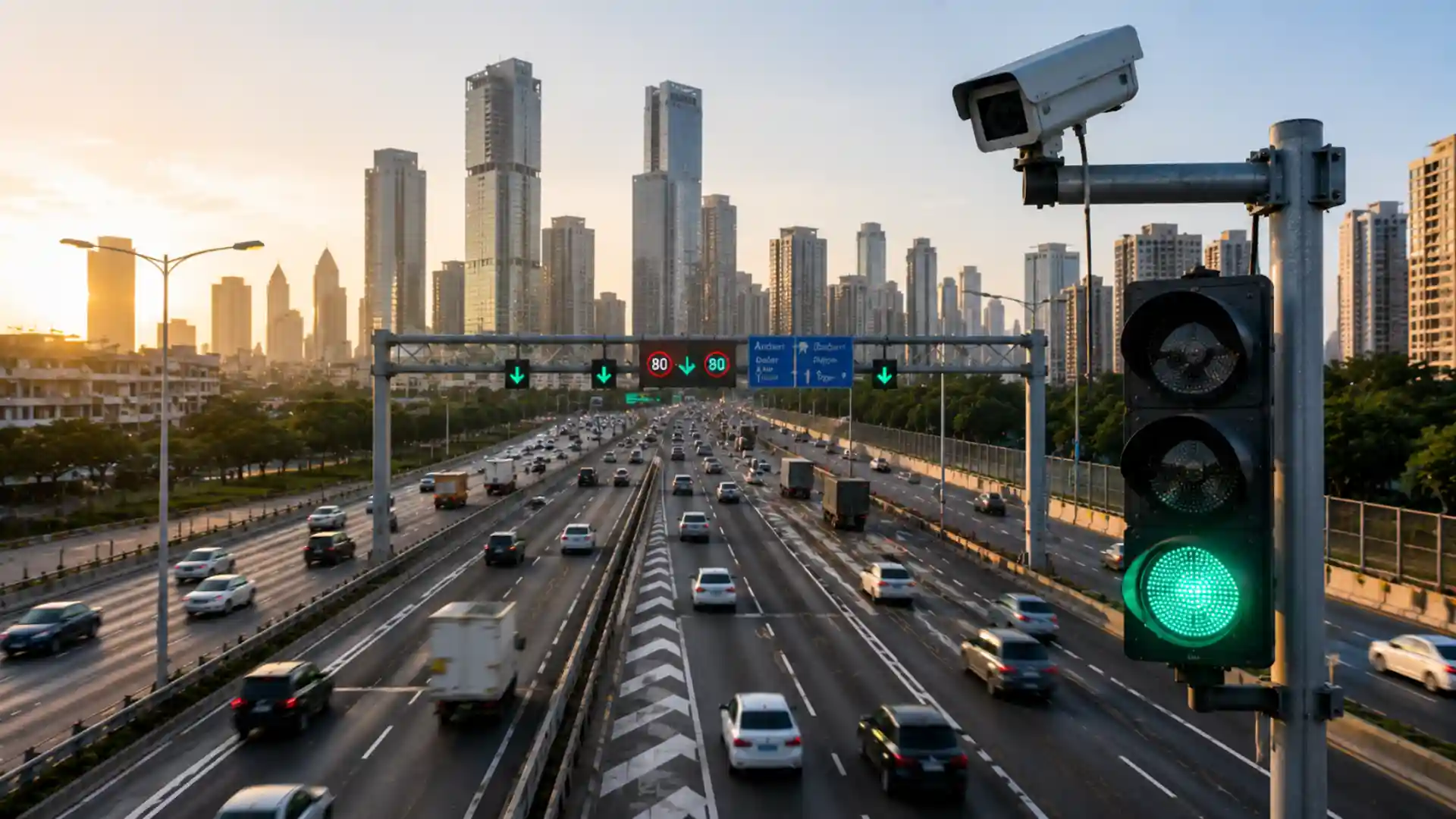
Wrong-way driving incidents are exceptionally dangerous due to the high speeds and head-on collision potential on highways. Smart highway traffic management systems employ automated detection and intervention mechanisms to prevent these catastrophic events. Wrong-side driving accounted for 9,432 deaths in India in 2023, highlighting the severity of the issue.
- AI Surveillance: AI-based surveillance systems automatically detect vehicles entering highway ramps or sections in the wrong direction.
- Instant Alerts: Immediate notifications are sent to traffic control centers and law enforcement.
- Dynamic Warning Signage: Variable Message Signboards (VMS) instantaneously display warnings to wrong-way drivers and oncoming traffic, preventing collisions.
The fatality rate for wrong-side driving crashes on National Highways exceeded 46% between 2019 and 2023, significantly higher than on other roads. Onnyx provides robust wrong-way driver detection as a critical component of its Smart Road Safety Solutions.
How Intelligent Lighting and Signage Improve Driver Visibility
Enhanced visibility is fundamental to road safety, particularly during adverse weather or at night. Intelligent Transport Systems (ITS) utilize adaptive lighting and dynamic signage to provide drivers with timely and relevant information. These systems proactively address changing road conditions, reducing accident risks.
- Variable Message Signboards (VMS): These display real-time safety warnings, incident alerts, and traffic conditions.
- Adaptive Lighting: Systems adjust illumination levels based on traffic density, weather, and time of day, ensuring optimal visibility.
- Digital Speed Limits: Displays dynamically change speed limits according to current road conditions, promoting compliance.
These technologies help modify driver behavior, encouraging safer speeds and increased awareness of hazards. Onnyx’s Smart Infrastructure solutions integrate these visual cues to create a more responsive and safer driving environment.
How Data-Driven Planning Optimizes Safety Infrastructure
Data-driven safety infrastructure planning moves beyond reactive fixes to strategically identify and mitigate accident risks. Traffic analytics, powered by Mobility Analytics, provide insights into accident-prone zones and infrastructure deficiencies. This enables evidence-based decision-making for long-term safety improvements.
- Accident Hotspot Identification: Advanced analytics pinpoint locations with high crash frequencies, guiding targeted interventions.
- Infrastructure Gap Analysis: Data informs decisions on road design enhancements, safety barrier placements, and intersection improvements.
- Long-Term Trend Analysis: Strategic infrastructure investments are guided by analyzing safety trends over time.
AI in proactive road infrastructure safety can identify dangerous locations proactively before crashes happen when accurate data is available,according to the OECD/ITF. Onnyx’s Traffic Intelligence platforms integrate with smart city dashboards for holistic urban safety planning, ensuring continuous improvement.
Safety Challenge | Traditional Approach | Smart HTMS Approach | Safety Impact |
Incident Detection Speed | Manual reporting, delayed discovery (minutes to hours) | AI-powered cameras, sensors (seconds) | Faster emergency response, 38% reduction in secondary crashes |
Emergency Response Coordination | Sequential notifications, manual dispatch | Integrated platforms, automated dispatch to nearest units | Reduced response times by 40.15%,better resource allocation |
Wrong-Way Driver Prevention | Static signs, limited enforcement | Automated detection, instant alerts, dynamic VMS warnings | Proactive intervention, prevention of head-on collisions, critical on high-speed corridors with over 46% fatality rate on NHs |
Weather Hazard Management | General forecasts, fixed speed limits | Real-time weather sensors, dynamic speed limits, VMS warnings | 25% reduction in accident risk in simulations, 29-34% crash reduction with VSL |
Accident-Prone Zone Identification | Post-accident analysis, historical data review | Predictive analytics, continuous risk assessment, hotspot mapping | Targeted infrastructure improvements, prevention of future incidents,17% crash reduction with AI-assisted traffic management |
Real-Time Driver Warnings | Fixed signage, radio announcements | VMS, in-vehicle alerts, adaptive traffic signals | Improved driver awareness, behavioral modification, reduced crash likelihood |
This table compares how traditional highway management approaches versus smart, technology-driven systems address critical safety challenges. It demonstrates the measurable safety advantages of intelligent traffic management infrastructure.
The 4-Layer Safety Shield Framework
The “4-Layer Safety Shield Framework” illustrates how smart highway traffic management creates overlapping safety layers for comprehensive protection. This structured model ensures a proactive, responsive, and continuously improving safety ecosystem.
- Predictive Prevention: Intelligent systems identify risks before incidents occur by analyzing historical data and real-time conditions. This includes forecasting congestion and weather-related hazards.
- Real-Time Detection: AI-powered cameras and sensors instantly identify incidents like accidents, stalled vehicles, or wrong-way drivers as they happen. This immediate recognition is vital for rapid intervention.
- Rapid Response: Once detected, the system coordinates immediate alerts to emergency services and dynamically adjusts traffic flow. This minimizes the impact of incidents and prevents secondary crashes.
- Continuous Learning: AI traffic management algorithms learn from every incident and operational data point. This iterative process refines predictive models and response protocols, making the system smarter over time.
This framework ensures that highway safety is not merely about reacting to problems but about building a resilient, intelligent infrastructure that evolves and adapts.
Key Takeaways
- Smart highway traffic management systems transition safety from reactive to proactive through real-time monitoring and predictive analytics.
- Automatic Incident Detection (AID) significantly reduces emergency response times and prevents secondary accidents.
- AI-powered wrong-way driver detection and dynamic signage are crucial for preventing catastrophic collisions.
- Intelligent lighting and Variable Message Signboards (VMS) enhance driver visibility and provide critical real-time warnings.
- Data-driven insights from traffic analytics enable strategic infrastructure planning and targeted safety improvements.
- The “4-Layer Safety Shield Framework” provides a comprehensive approach to highway safety, integrating prevention, detection, response, and continuous learning.
Conclusion: The Future of Highway Safety Through Intelligent Systems
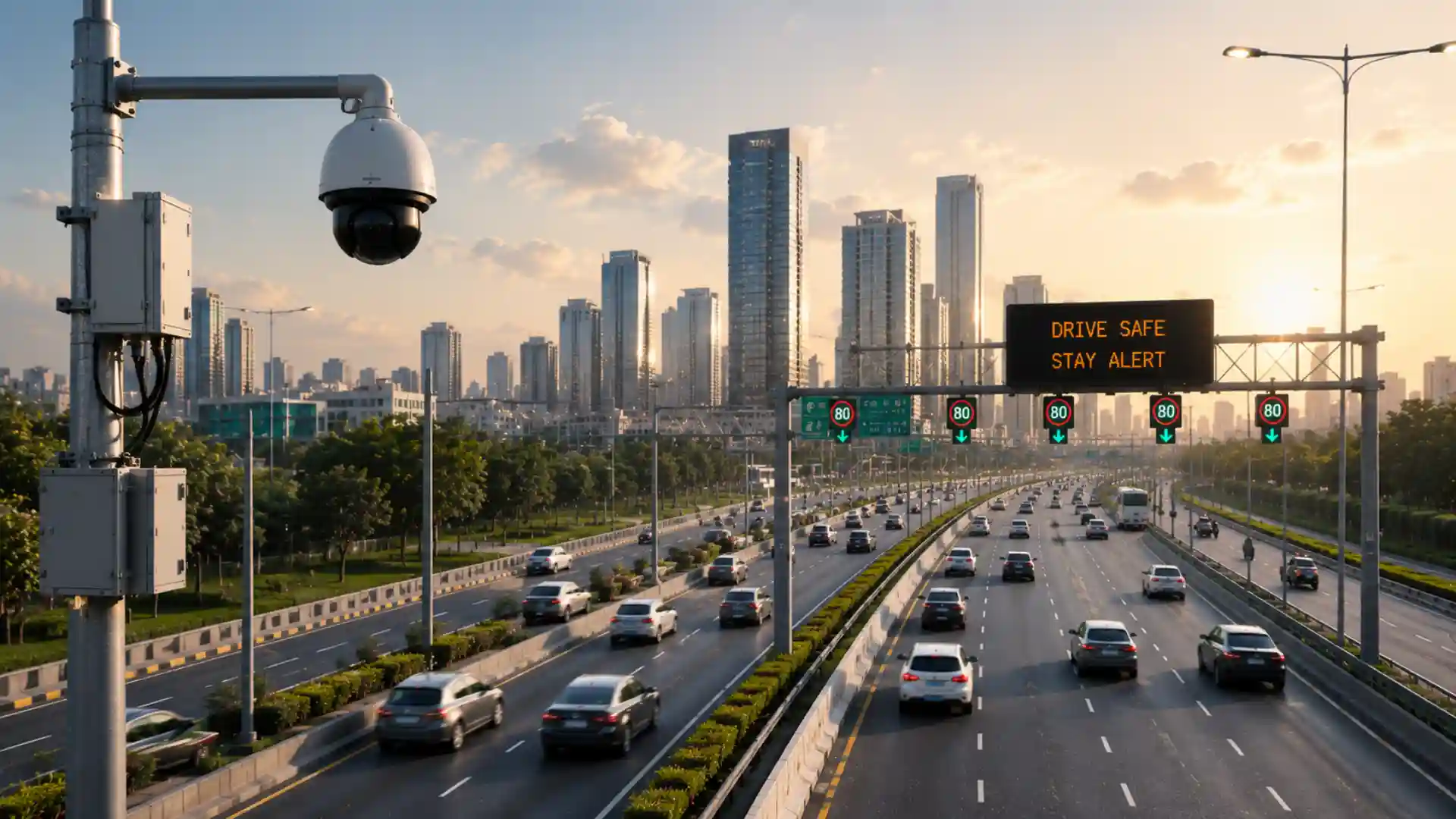
The measurable safety improvements from adopting smart highway traffic management are undeniable, moving us closer to Vision Zero goals. These integrated systems, like those offered by Onnyx, leverage advanced Intelligent Transport Systems (ITS) to create safer and more efficient transportation ecosystems. The significant reduction in national highway fatalities in India in 2025, with 57,482 deaths down from 64,772 in 2024, as reported by the Indian Express, underscores the potential for sustained improvement through technology. Next-generation capabilities, including V2X communication and autonomous vehicle integration, promise to further enhance road safety. Authorities must modernize highway safety infrastructure with intelligent solutions to meet the challenges of growing traffic volumes and complex urban mobility. Onnyx remains committed to delivering these technology-driven solutions, enabling real-time traffic monitoring, intelligent traffic control, and data-driven decision-making for safer, smarter highways.
Key Terms Glossary
Intelligent Transport Systems (ITS): Advanced applications that provide innovative services relating to different modes of transport and traffic management, enabling users to be better informed and make safer, more coordinated, and smarter use of transport networks.
AI-Powered Traffic Management: The use of artificial intelligence algorithms and machine learning to analyze traffic data in real time, predict patterns, and optimize traffic flow and safety. Explore Learn more.
Automatic Incident Detection (AID): Technologies that automatically identify traffic incidents such as accidents, stalled vehicles, or debris on the road, typically using video analytics or sensors.
Variable Message Signboards (VMS): Electronic signs placed along highways that display dynamic messages to drivers, providing real-time information about traffic conditions, incidents, or warnings.
Predictive Analytics: The use of statistical algorithms and machine learning techniques to identify the likelihood of future outcomes based on historical data, applied here to forecast traffic safety risks. Explore Learn more.
Vision Zero: A multi-national road traffic safety project that aims to achieve a road system with no fatalities or serious injuries involved in road traffic.
V2X Communication: Vehicle-to-everything communication, an intelligent transportation system technology that allows vehicles to exchange information wirelessly with other vehicles, infrastructure, and pedestrians.
Traffic Intelligence: The collection, analysis, and interpretation of real-time and historical traffic data to gain insights into traffic patterns, congestion, and incident management.